Fudoshin Aikido Australia

Training notes: Shomenuchi ikkyo

Ikkyo Osensei 2In the below video Morihiro Saito Sensei (9th Dan) demonstrates the Aikido technique shomenuchi ikkyo (omote and ura).

In the demonstrated technique, which is based on The Founder’s instruction in the text “Budo” (1938), the nage initiates the application by applying a vertical strike to the face of the uke.

Pinning techniques are referred to as osae waza in Aikido practice. Ikkyo is the “first technique” in osae waza.


ADDITIONAL NOTES

  • Technical instruction – Omote and ura applications – Morihiro Saito Sensei


  • Shomenuchi ikkyo (omote) – Takemusu Aikido Vol 1.

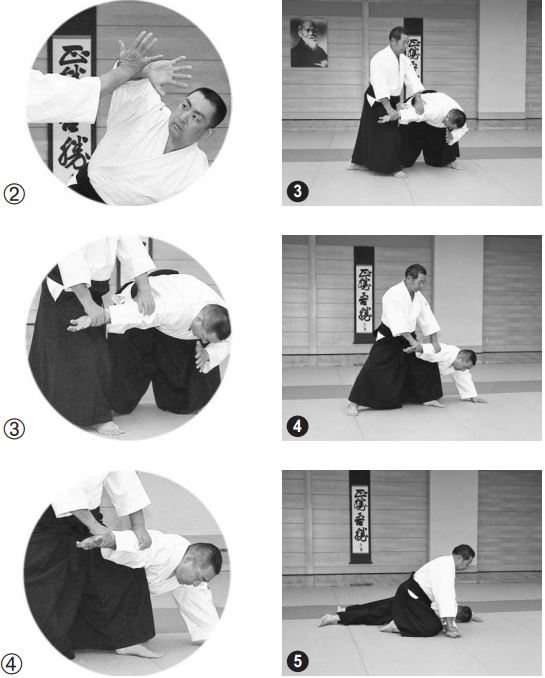
In the below pictorial demonstration, Morihiro Saito provides instruction on the basic omote application of the technique. Notably in the basic application the nage strikes first.

ikkyo-1-omoteikkyo-2


Shomenuchi ikkyo (ura) – Takemusu Aikido, Vol. 1 

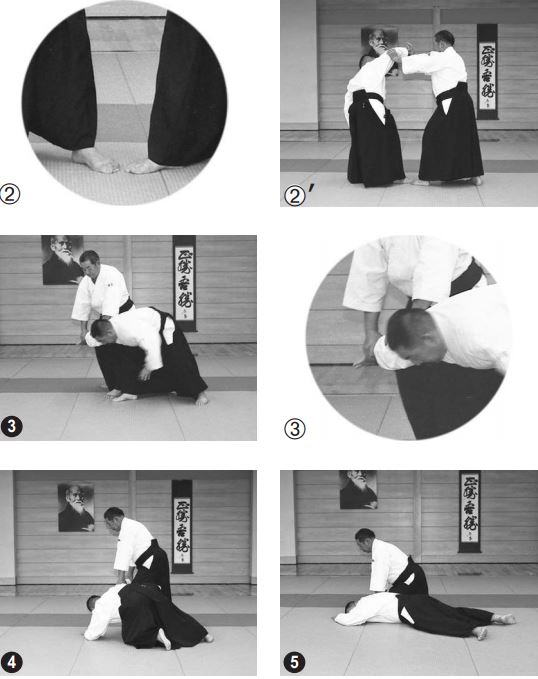
In the below pictorial demonstration, Morihiro Saito provides instruction on the basic ura application of the technique. Notably in the basic application outlined below the nage strikes first.

However, the basic ura version is also able to be applied if the nage initiates the strike first.    In the Founder’s 1938 manual it states “When your opponent strikes first with shomen, turn around the attack with irimi tankan, use your right hand to receive the blow and then control your opponent as described..”.

shomen-ikkyo-ura-1shomen-ikkyo-ura-2


  • Ikkyo pin

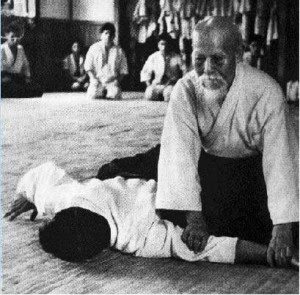
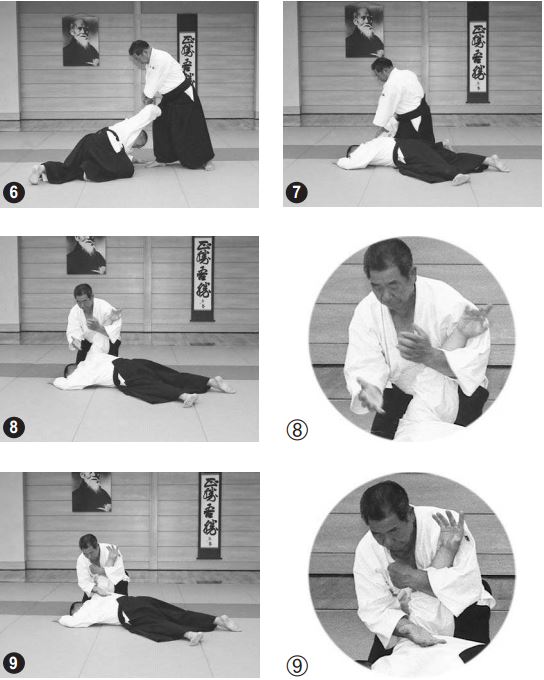
The pin for this technique is often seen done with a form of nikyo pin.  This is not in fact the correct pin.  In the below picture, O’sensei demonstrates the pin for shomenuchi ikkyo.

Osensei ikkyo-pinikkyo in 2 o sensei_1-300x295


In his 1933 text “Budo“, Master Morihei Ueshiba (O’sensei) also states that “when pinning your opponent to the ground it is essential that his arm be at a right angle to his body” (see picture).

  • Uke’s arm remains horizontal and in front of nage’s centre

The uke’s arm remains horizontal in the second part of the technique.  The uke’s hand should not be higher than their shoulder or vice versa. The uke’s arm always remains in front of the nage’s centre.

This is the case regardless of whether the technique is performed standing or where uke and nage are both kneeling (suwari waza).

  • Footwork for ki no nagare practice

In the following video Chicko Sensei uses the sword to demonstrate the footwork for entering for omote applications in (ki no nagare) free flowing practice. Ura footwork is also explained.


  • Shomenuchi ikkyo – Other Aiki principles for ki no nagare practice

In the below video Chicko Xerri Sensei (6th Dan AKI Aikikai) provides instruction on some of the key Aiki principles that underpin practice of  Shomenuchi ikkyo for free flowing practice (ki no nagare).

Our dojo is part of the Fudoshin Australia Group of dojos  operating under the guidance and mentorship of Chicko Sensei.

The technical aspects underpinning dynamic practice of shomenuchi ikkyo are further explored in the below instructional video featuring Yoshimitsu Yamada Sensei (8th Dan Aikikai).  The uke is a young Donovan Waite Sensei (7th Dan ).

  • Alternate atemi application – Aikido Warrior Fudoshin Dojo

In the below video students from our dojo demonstrate an application of the technique where the elbow is used by the nage to strike and take the initial balance of the uke.


  • Demonstration by Morihei Ueshiba, Founder of Aikido 


  • Shomenuchi ikkyo – Zagi Waza

In the below video Chicko Xerri Sensei explains the Aiki principles for shomenuchi ikkyo when it is practised from zagi waza/suwari waza (ie where both nage and uke are kneeling).


Ian Grant
Dojo Cho
Aikido Warrior Fudoshin Dojo, Brisbane


Training notes: Ai hanmi katatedori nikyo

nilyo 2Nikyo techniques involve the application of a painful pronating or adductive wristlock to subdue or pin an attacker.  They are a common feature in the syllabus of most Aikido schools.

Nikyo techniques can be used to address a wide variety of attacks.  They are particularly effective in circumstances where the uke attempts to grab the clothing or wrist of a nage (as a prelude to follow up strike).

Our dojo is a Fudoshin dojo operating under the guidance and mentorship of Chicko Xerri Sensei 6th Dan AKI (Aikikai).

In the below video Chicko Sensei  explains the sword movements and Aiki principles  which underpin the application of Ai hanmi katatedori nikyo. This form of nikyo is applied in response to an attack in the form of a cross hand grab.

Depending on the school, Ai hanmi katatedori nikyo is also referred to as Kosadori nikyo.


ADDITIONAL NOTES

  • Alternate application (1) Morihiro Saito Sensei

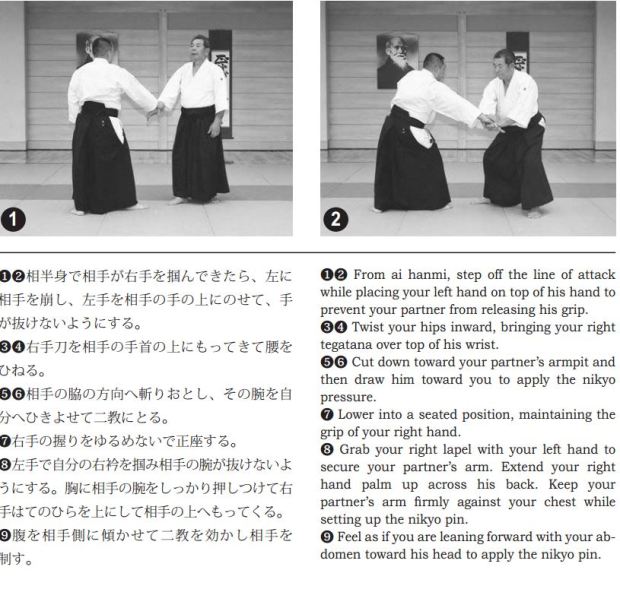
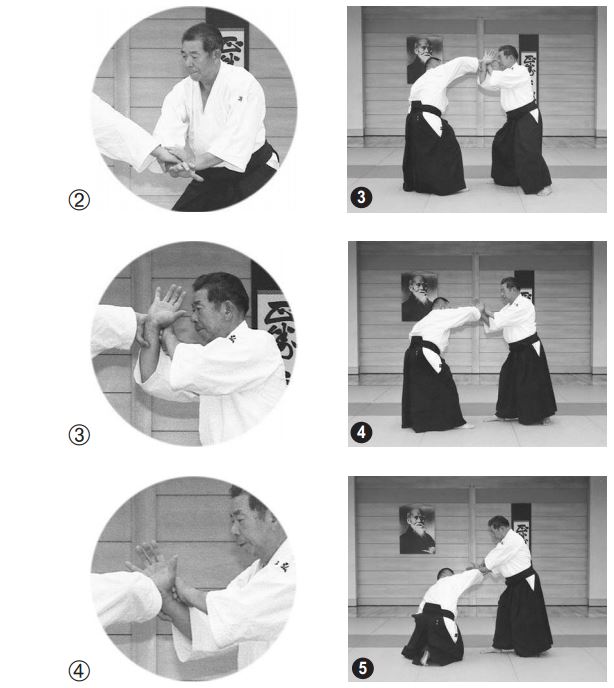
See below a photo demonstration (including description) and video of Morihiro Saito Sensei (9th Dan) explaining the fundamental elements of Kosadori nikyo as practised by O’sensei in the immediate post war period of his training life.

saito-nikyo

saito-nikyo-2

saito-nikkyo-3


  • Alternate (Ki no nagare) application (2) – London Aikido Club

In the below video Sensei Andy Hathaway demonstrates and provides instruction on Kosadori nikyo as practised at the London Aikido Club.


  • Alternate application (3) 

In the below video Sensei Andy Hathaway of the London Aikido Club demonstrates and provides instruction on an alternate takedown for Kosadori nikyo.


Alternate application (4) – Sensei Andy Sato


  • Brief Biography – Morihiro Saito Sensei (1928-2002)

saito_seiza_260Morihiro Saito Sensei’s  practice of Aikido spanned 56 years and he is one of the most important teachers in Aikido history.  Saito Sensei was a live-in student of O’sensei for more than 20 years at his home dojo in Iwama, Japan.

Saito Sensei spent his teaching life dedicated to preserving the technical style of Aikido as practised and shown to him by O’sensei in the post-war period.  Without his commitment to preserving the Aikido of the Founder and extensive efforts to record and document his teachings, much of the Aikido of O’sensei may have been lost.

Have a great week

Ian Grant
Doj Cho
Aikido Warrior Dojo


Training notes: Yokomenuchi kotegaeshi

morihiro-saito-kotegaeshiYokomenuchi kotegaeshi is an Aikido technique which uses an outward wrist turn (kotegaeshi) as a defence against a strike to the side of the head (yokomenuchi).

In the below video Morihiro Saito Sensei (1928-2002) provides instruction on yokomenuchi kotegaeshi as practised by O’Sensei (the Founder of Aikido) in the post-war period of his life.


ADDITIONAL NOTES

  • Initial set up – technical notes


  • Additional technical instruction (1) – Kumitachi – Saito Sensei

In the below video, Saito Sensei explains the sword movement underpinning yokomenuchi kotegaeshi.


  • Technical instruction (2) – Tanto – Saito Sensei

In the below video, Saito Sensei demonstrates and explains yokomenuchi kotegaeshi in the situation where the uke is attacks with a knife (tanto).


  • Alternate application (1) – Yoshimitsu Yamada Sensei

In the below video Yoshimitsu Yamada Sensei provides instruction on alternate versions of yokomenuchi kotegaeshi.


  • Alternate Application 2 – Andy Sato Sensei


  • Kuzushi at first contact

Like all Aikido techniques, it is essential the nage take the uke‘s balance at first contact (ie with the initial 2 handed cut). Failure to do this will allow the uke to counter the technique and undertake a follow up attack (eg. a strike or grapple).

  • Option for standing pin

standing pin


  • Yokomenuchi kotegaeshi – Zagi waza

In the below photos O’sensei demonstrates the application of yokomenuchi kotegaeshi where the nage and uke are both on their knees. This is referred to as zagi waza or suwari waza, depending on the school of Aikido.

K1

K2K3

  • K4


  • Brief Biography – Morihiro Saito Sensei (1928-2002)

saito_seiza_260Morihiro Saito Sensei’s  practice of Aikido spanned 56 years and he is one of the most important teachers in Aikido history.  Saito Sensei was a live-in student of O’sensei for more than 20 years at his home dojo in Iwama, Japan.

Saito Sensei spent his teaching life dedicated to preserving the technical style of Aikido as practised and shown to him by O’sensei in the post-war period.  Without his commitment to preserving the Aikido of the Founder and extensive efforts to record and document his teachings, much of the Aikido of O’sensei would have no doubt been lost.  The Aikido world owes him a great debt.

Ian Grant
Dojo Cho 
Aikido Warrior Dojo

Playing with koshi nage – A bokken and jo perspective

Although part of the broader Aikido syllabus, one of our favourite techniques to practice at the dojo is koshi nage (hip throw). In fact, there would rarely be a class where this technique does not appear in some form.

bokken koshi nageLike many Aikido techniques, the origins of koshi nage trace back to the battlefield. With this in mind,  we recently resolved to study the technique in the context of paired weapons practice, specifically bokken (wooden sword) vs bokken and jo (staff) vs bokken. Below is a video recording of our first efforts in this regard.

The informally recorded demonstrations are intentionally experimental and involve subtle differences in terms of hand placement on the weapon, form of ukemi, method of moving off-line, atemi, feet position and balance breaking.   All in all a very useful and informative learning exercise.

As a qualifier when viewing the video, please note that our dojo is not a sword or jo school and we are not about learning to “fight” with these weapons.  For us, the purpose of paired weapons practice is to magnify errors in our Aikido technique and to give us the  opportunity to apply Aikido principles in different situations.

Have a great week

Ian Grant
Dojo Cho
Aikido Warrior Dojo, Brisbane

Related Posts

Training notes – Ushiro ryotedori ikkyo (2) – Ki no nagare

In the below video, Christian Tissier Shihan (8th Dan Aikikai) demonstrates the omote and ura versions of the Aikido technique ushiro ryotedori ikkyo.

The demonstrations are completed in a dynamic free flowing form whereby the uke commences the attack by proceeding to the front of the nage, grabbing the nage’s wrist and then moving to the rear (with a view to also grabbing the nage’s second wrist).

This form of practice is referred to in some schools as ki no nagare.  In ki aikido schools it is sometimes referred to as ryutai.


ADDITIONAL NOTES

  • Movement and Sword principles

In the below video Chicko Xerri Sensei  (6th Dan Aki Aiki kai) explores the sword principles that underpin the higher level practice of ushiro techniques.  The exploration is particularly applicable to ikkyo applications.

Our dojo is part of the Aikido Kenkyukai Fodoshin Dojos (Australia).  Chicko Sensei is the Shihan for our school.


  • Balance breaking principles – Kuzushi

In the below video produced by Senshin Center Aikido Dojo, balance breaking principles applicable to ushiro attacks are explored. Kuzushi is unfortunately something that is sometimes overlooked in Aikido. The fact remains, however, that it is near impossible to throw a centred uke unless they are either cooperating or overpowered by a significantly larger nage.


  • Alternate application (1) – Chicko Xerri Sensei – AKI Fudoshin Aikido

In the below video Chicko Xerri Sensei explores an alternate option for addressing a ushiro attack whereby the uke is not permitted to move to the rear of the nage. Chicko sensei emphasises the important aiki principle of creating a space to move before attempting an aikido application.


  • Alternate application (2) – Chicko Xerri Sensei – AKI Fudoshin Aikido

In the below video Chicko Xerri Sensei explores a further option for addressing ushiro attacks.  The option readiy sets up the circumstances for an ikkyo application.


  • Ki Aikido

In the below video, Koretoshi Maruyama Sensei provides instruction on Ushiro tekubidori ikkyo as practised in Aikido Yuishinkai.  The method of application is typical of the approach taken by ki aikido schools.


All the best

Ian Grant
Head Instructor
Aikido Warrior Dojo