Aikido Warrior

Seoi otoshi and seoi nage – What’s the difference?

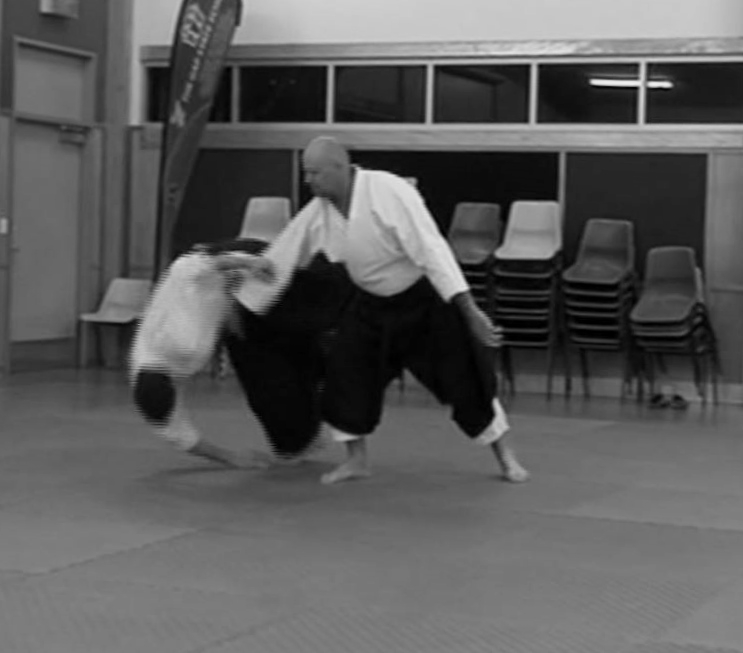
seio otoshiWhile by no means the most commonly practised “drop” technique, seoi otoshi has nonetheless been part of Aikido since its early days.  A question often asked whenever seio otoshi is practised in the dojo is what is the difference between a seoi otoshi (shoulder drop) and a seoi nage (shoulder throw)?

Given the fact that both techniques involve the loading of the uke onto the back of the nagi (which is what “seoi”means), the confusion between the techniques is understandable. Its is also a technically trite (albeit correct) response to merely state that seoi nage is something more associated with Judo than Aikido.

From a technical perspective, the distinguishing feature of a seio otoshi is that the nage drops to one or both knees and stays there until the completion of the technique.  By Seio nagecomparison, in seoi nage the nage completes the technique from a standing position. Further, a technique is still a seoi nage notwithstanding that the nage may have dropped to one or both knees and then returned to a standing position to complete it.

The below video includes demonstrations of both seio otoshi and seio nage by seniors at our dojo.  The video is a compilation from various sources, including gradings and taninzugake (free form) practice.

Have a great week.

Ian Grant
Head Instructor
Aikido Warrior Dojo, Brisbane

Training notes – Katadori ikkyo (ura)

ikkyo 3We have a number of 5th Kyu (yellow belt) gradings to look forward to in the next few weeks.  With this in mind, I thought it might be helpful to put up some video training notes on one of the sometimes more challenging techniques in the 5th Kyu Aikido Yuishinkai syllabus –  katadori ikkyo (ura).

The technique is performed in the context of a grabbing attack to the shoulder (katadori). While it is possible to end the technique with a projection, it is generally finished with a pin.

In the below video Master Koretoshi Maruyama, Founder of Aikido Yuishinkai, provides instruction on the basic levels (kotai and juntai) of katadori ikkyo (ura).  These are the levels which are tested in a 5th Kyu grading in our school.

The video was recorded at a seminar in 2008 held at Aikido School of Excellence, Tasmania.

Have a great weekend

Ian Grant
Head Instructor
Aikido Warrior Dojo

Related posts

Playing with koshi nage – A bokken and jo perspective

Although part of the broader Aikido syllabus, one of our favourite techniques to practice at the dojo is koshi nage (hip throw). In fact, there would rarely be a class where this technique does not appear in some form.

bokken koshi nageLike many Aikido techniques, the origins of koshi nage trace back to the battlefield. With this in mind,  we recently resolved to study the technique in the context of paired weapons practice, specifically bokken (wooden sword) vs bokken and jo (staff) vs bokken. Below is a video recording of our first efforts in this regard.

The informally recorded demonstrations are intentionally experimental and involve subtle differences in terms of hand placement on the weapon, form of ukemi, method of moving off-line, atemi, feet position and balance breaking.   All in all a very useful and informative learning exercise.

As a qualifier when viewing the video, please note that our dojo is not a sword or jo school and we are not about learning to “fight” with these weapons.  For us, the purpose of paired weapons practice is to magnify errors in our Aikido technique and to give us the  opportunity to apply Aikido principles in different situations.

Have a great week

Ian Grant
Dojo Cho
Aikido Warrior Dojo, Brisbane

Related Posts

Learning to breakfall – its a lot easier than it looks

Yokomenuchi kokyu nageAt our dojo learning to breakfall is an accepted part of our training culture.  The ability to breakfall is something we learn and develop to make sure we stay safe in our practice and to enable us to practice Aikido at its more advanced levels.

Most classes include a breakfalling skills development component. The focus of the training tends to be on traditional breakfalling, as this form of ukemi can be  universally applied to receive any technique.  In addition, some seniors also venture down the supplemental path of what is sometimes referred to as “feather rolling”.

OLYMPUS DIGITAL CAMERAA key aspect of our training is to not only focus on the uke, but also the nage. Given that the decision as to whether the uke is to breakfall generally lies with the nage, it is important that the nage has the skills to not only remain stable and anchored (if for no other reason so as not to fall on their uke), but also support and turn the uke to assist them in landing safely and correctly.

The below video shows a selection of some of the breakfalling exercises that we commonly do at the dojo. While some may appear daunting at first look, they are surprisingly easy to pick up with the appropriate instruction. They are also a lot of fun.  You will note from the video that they are being practised by persons of varied ages, sizes and experience levels.

Have a great weekend

Ian Grant
Head Instructor
Aikido Warrior Dojo, Brisbane

 Related articles

Training notes: Munetsuki kokyu nage (omote)

kokyu nage - Peter kellyIn the below video, Peter Kelly Sensei, Aikido Yuishinkai Tasmania, demonstrates and provides instruction on an alternate omote form of munetsuki kokyu nage.  The technique is also sometimes referred to as udekime nage (arm extension throw).

The below video was recorded at a class given by Peter Sensei at our dojo on 12 August 2015.   

Have a great week

Ian Grant
Dojo Cho 
Aikido Warrior Dojo