Fudoshin

Training notes: Yokomenuchi kokyu nage (makikomi)

In the below video Morihiro Saito Sensei (1928-2002) provides instruction on 2 traditional versions of yokomenuchi makikomi as practised by O’Sensei (the Founder of Aikido) in the immediate post-war period of his life.

Makikomi (“wrap around”) techniques are most commonly seen used in response to a traditional strike to the side of the head (yokomenuchi).  However, they can also be applied to a range of other attack forms.  Depending on the school,  makikomi techniques are sometimes referred to as another form of kokyu nage (“breath throw”).


ADDITIONAL NOTES

  • Position of hands at first contact

makikomi


  • Aikido Yuishinkai  (Version 1)

In the below video Master Koretoshi Maruyama, Founder of Aikido Yuishinkai, provides  instruction on the Aikido technique yokomenuchi makikomi as practised in Aikido Yuishinkai.


  • Aikido Yuishinkai (Version 2)

Ian Grant
Dojo Cho
Aikido Warrior Dojo

Free form ukemi training

o-sensei,throw,Training in how to safely receive technique (ukemi) is something that is particularly emphasised at our dojo.  In every class time is set aside to develop and refine our ukemi skills.  Everyone participates, however, the level and intensity of the practice varies consistent with each student’s experience and skills.

One form of ukemi practice  that we have a lot of fun doing is what we call “free form ukemi training”.  Basically the uke repeatedly receives different variations of the same technique which, depending on the variation, result in unpredictable and different falling outcomes.

Ian Grant - Aikido UkemiRyotadori seoi otoshi is a favourite technique for this sort of training. Subtle changes in the application of the technique result in the uke having to unpredictably roll or breakfall from the left or right hand side while in an unbalance position.  They also result in alterations in the space between the uke and nage, as well as the extent to which the some or all of the nage’s body operates to sever the uke’s connection to the ground.

The use of ryotadori seoi otoshi  for this sort of training is demonstrated in the video below.


ADDITIONAL NOTES

  • Video Library: Falling and uke arts

For further videos and posts on ukemi training, including how to forward roll, see Video Library: Falling and uke arts.


  • Ryotadori seoi otoshi – the basic elements

In the below video, Peter Kelly Sensei, International Instructor for Aikido Yuishinkai, demonstrates the shape and footwork for ryotadori seoi otoshi as practised in our school. As noted in the lead-in commentary for the featured video, in order to produce different ukemi outcomes for training purposesparticipants made subtle (and maybe at times not so subtle) amendments to the execution of the technique.


  • Training methods for learning to breakfall

For examples of training methods that we use to develop our breakfalling skills (one aspect of ukemi) see the below video.  More detailed information on ukemi training can be found in the Video Library: Falling and uke arts.


Have a great week.

Ian Grant
Head Instructor
Aikido Warrior Dojo

Training notes: Shomenuchi ikkyo

Ikkyo Osensei 2In the below video Morihiro Saito Sensei (9th Dan) demonstrates the Aikido technique shomenuchi ikkyo (omote and ura).

In the demonstrated technique, which is based on The Founder’s instruction in the text “Budo” (1938), the nage initiates the application by applying a vertical strike to the face of the uke.

Pinning techniques are referred to as osae waza in Aikido practice. Ikkyo is the “first technique” in osae waza.


ADDITIONAL NOTES

  • Technical instruction – Omote and ura applications – Morihiro Saito Sensei


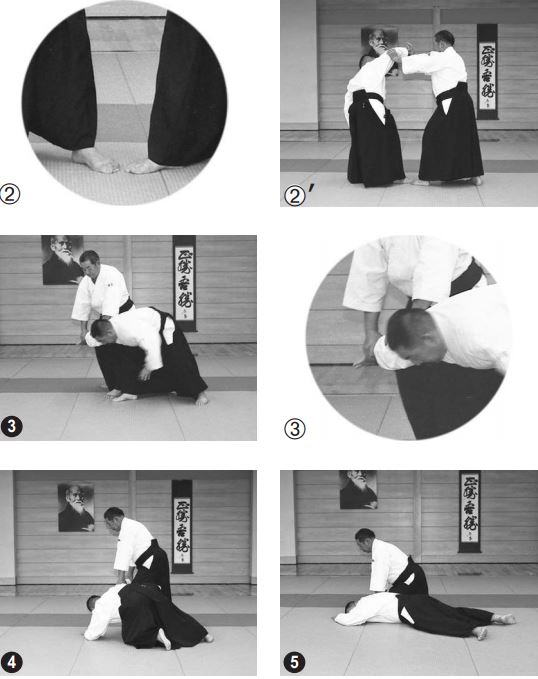
  • Shomenuchi ikkyo (omote) – Takemusu Aikido Vol 1.

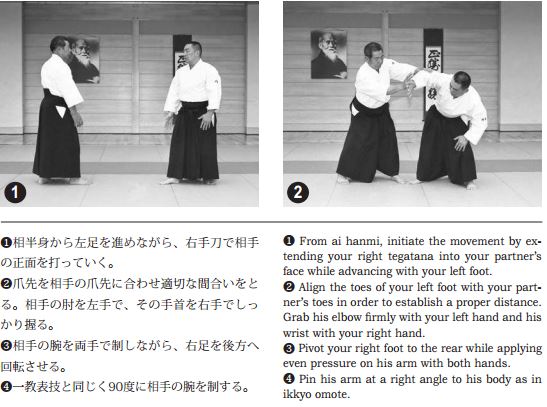
In the below pictorial demonstration, Morihiro Saito provides instruction on the basic omote application of the technique. Notably in the basic application the nage strikes first.

ikkyo-1-omoteikkyo-2


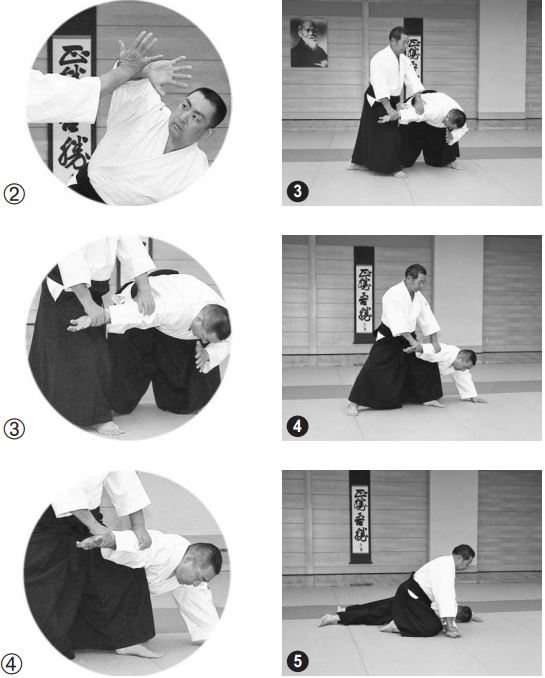
Shomenuchi ikkyo (ura) – Takemusu Aikido, Vol. 1 

In the below pictorial demonstration, Morihiro Saito provides instruction on the basic ura application of the technique. Notably in the basic application outlined below the nage strikes first.

However, the basic ura version is also able to be applied if the nage initiates the strike first.    In the Founder’s 1938 manual it states “When your opponent strikes first with shomen, turn around the attack with irimi tankan, use your right hand to receive the blow and then control your opponent as described..”.
shomen-ikkyo-ura-1shomen-ikkyo-ura-2


  • Ikkyo pin

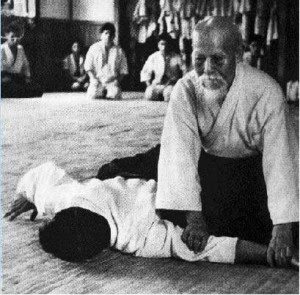
The pin for this technique is often seen done with a form of nikyo pin.  This is not in fact the correct pin.  In the below picture, O’sensei demonstrates the pin for shomenuchi ikkyo.

Osensei ikkyo-pinikkyo in 2 o sensei_1-300x295


In his 1933 text “Budo“, Master Morihei Ueshiba (O’sensei) also states that “when pinning your opponent to the ground it is essential that his arm be at a right angle to his body” (see picture).

  • Uke’s arm remains horizontal and in front of nage’s centre

The uke’s arm remains horizontal in the second part of the technique.  The uke’s hand should not be higher than their shoulder or vice versa. The uke’s arm always remains in front of the nage’s centre.

This is the case regardless of whether the technique is performed standing or where uke and nage are both kneeling (suwari waza).

  • Footwork for ki no nagare practice

In the following video Chicko Sensei uses the sword to demonstrate the footwork for entering for omote applications in (ki no nagare) free flowing practice. Ura footwork is also explained.


  • Shomenuchi ikkyo – Other Aiki principles for ki no nagare practice

In the below video Chicko Xerri Sensei (6th Dan AKI Aikikai) provides instruction on some of the key Aiki principles that underpin practice of  Shomenuchi ikkyo for free flowing practice (ki no nagare).

Our dojo is part of the Fudoshin Australia Group of dojos  operating under the guidance and mentorship of Chicko Sensei.

The technical aspects underpinning dynamic practice of shomenuchi ikkyo are further explored in the below instructional video featuring Yoshimitsu Yamada Sensei (8th Dan Aikikai).  The uke is a young Donovan Waite Sensei (7th Dan ).

  • Alternate atemi application – Aikido Warrior Fudoshin Dojo

In the below video students from our dojo demonstrate an application of the technique where the elbow is used by the nage to strike and take the initial balance of the uke.


  • Demonstration by Morihei Ueshiba, Founder of Aikido 


  • Shomenuchi ikkyo – Zagi Waza

In the below video Chicko Xerri Sensei explains the Aiki principles for shomenuchi ikkyo when it is practised from zagi waza/suwari waza (ie where both nage and uke are kneeling).


Ian Grant
Dojo Cho
Aikido Warrior Fudoshin Dojo, Brisbane


Looking back to look forward – Exploring Aikido’s roots

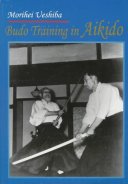
Book 1Master Morihei Ueshiba (O’sensei), the Founder of Aikido, authored  3 instructional manuals in his lifetime.  The first “Budo Training in Aikido” (originally called “Budo Renshu“) was published in 1933.

Budo Renshu” contains 166 techniques, all of which are accompanied by hand drawings and training notes. The techniques in the manual represent an interesting blend of Daito Ryu and what would become to be known as Aiki Budo (and then later Aikido).

In the below video, Dojo senior Jeremy Gehrke draws on his studies of Aikido and Daito Ryu to demonstrate some of the techniques found in Budo Renshu and some of their  extended applications.  Please note the demonstrations are informal only and done with minimal planning or preparation.


Ian Grant
Head Instructor
Aikido Warrior Dojo


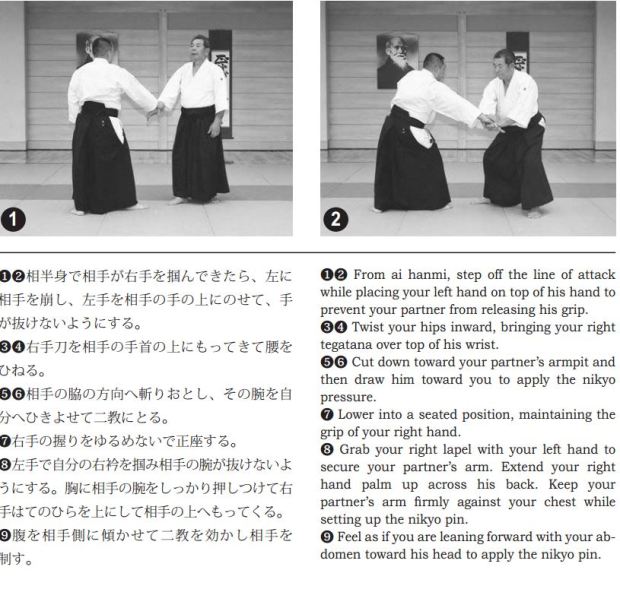
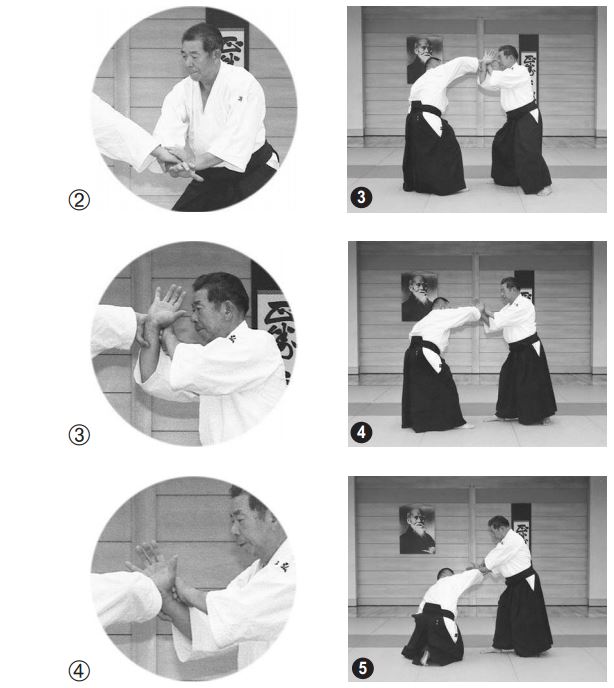
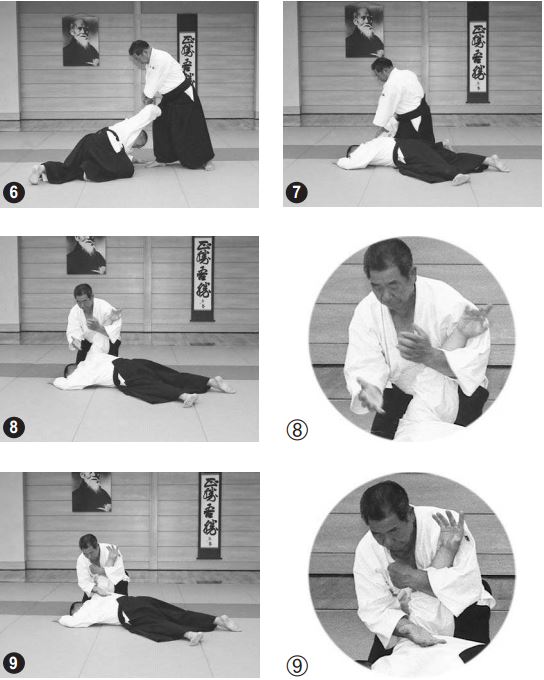
Training notes: Ai hanmi katatedori nikyo

nilyo 2Nikyo techniques involve the application of a painful pronating or adductive wristlock to subdue or pin an attacker.  They are a common feature in the syllabus of most Aikido schools.

Nikyo techniques can be used to address a wide variety of attacks.  They are particularly effective in circumstances where the uke attempts to grab the clothing or wrist of a nage (as a prelude to follow up strike).

Our dojo is a Fudoshin dojo operating under the guidance and mentorship of Chicko Xerri Sensei 6th Dan AKI (Aikikai).

In the below video Chicko Sensei  explains the sword movements and Aiki principles  which underpin the application of Ai hanmi katatedori nikyo. This form of nikyo is applied in response to an attack in the form of a cross hand grab.

Depending on the school, Ai hanmi katatedori nikyo is also referred to as Kosadori nikyo.


ADDITIONAL NOTES

  • Alternate application (1) Morihiro Saito Sensei

See below a photo demonstration (including description) and video of Morihiro Saito Sensei (9th Dan) explaining the fundamental elements of Kosadori nikyo as practised by O’sensei in the immediate post war period of his training life.

saito-nikyo

saito-nikyo-2

saito-nikkyo-3


  • Alternate (Ki no nagare) application (2) – London Aikido Club

In the below video Sensei Andy Hathaway demonstrates and provides instruction on Kosadori nikyo as practised at the London Aikido Club.


  • Alternate application (3) 

In the below video Sensei Andy Hathaway of the London Aikido Club demonstrates and provides instruction on an alternate takedown for Kosadori nikyo.


Alternate application (4) – Sensei Andy Sato


  • Brief Biography – Morihiro Saito Sensei (1928-2002)

saito_seiza_260Morihiro Saito Sensei’s  practice of Aikido spanned 56 years and he is one of the most important teachers in Aikido history.  Saito Sensei was a live-in student of O’sensei for more than 20 years at his home dojo in Iwama, Japan.

Saito Sensei spent his teaching life dedicated to preserving the technical style of Aikido as practised and shown to him by O’sensei in the post-war period.  Without his commitment to preserving the Aikido of the Founder and extensive efforts to record and document his teachings, much of the Aikido of O’sensei may have been lost.

Have a great week

Ian Grant
Doj Cho
Aikido Warrior Dojo