Chicko Xerri Sensei

New beginnings …

chicko-senseiAikido Warrior Dojo is pleased to announce that it is now part of Fudoshin Dojos Australia operating under the guidance and mentorship of Chicko Xerri Sensei, 6th dan AKI (Aikikai), Tokyo, Japan.

Chicko Sensei has more than 40 years uninterrupted Aikido experience, is Japan certified and Doshu Ueshiba endorsed.  Chicko Sensei’s long history with Aikido includes 10 years exclusively with Sugano Seiichi shihan Sydney, Aikikai Australia and presently (since 1981) with mentor of 35 years, Takeda Yoshinobu shihan, 8th dan (Shonan Aikido Renmei Kamakura, Aiki-kai, Japan).

Joining the Fodoshin collaboration of dojos represents an inspiring new beginning for our dojo. We look to a bright future dedicated to developing our skills in Aikido practice and deepening our knowledge of the philosophical principles that underpin our unique form of budo.


Have a great week and a huge thank you to those who have wished our dojo well in its new path.

Ian Grant
Dojo Cho
Aikido Warrior Fudoshin Dojo


Training notes: Shomenuchi ikkyo

Ikkyo Osensei 2In the below video Morihiro Saito Sensei (9th Dan) demonstrates the Aikido technique shomenuchi ikkyo (omote and ura).

In the demonstrated technique, which is based on The Founder’s instruction in the text “Budo” (1938), the nage initiates the application by applying a vertical strike to the face of the uke.

Pinning techniques are referred to as osae waza in Aikido practice. Ikkyo is the “first technique” in osae waza.


ADDITIONAL NOTES

  • Technical instruction – Omote and ura applications – Morihiro Saito Sensei


  • Shomenuchi ikkyo (omote) – Takemusu Aikido Vol 1.

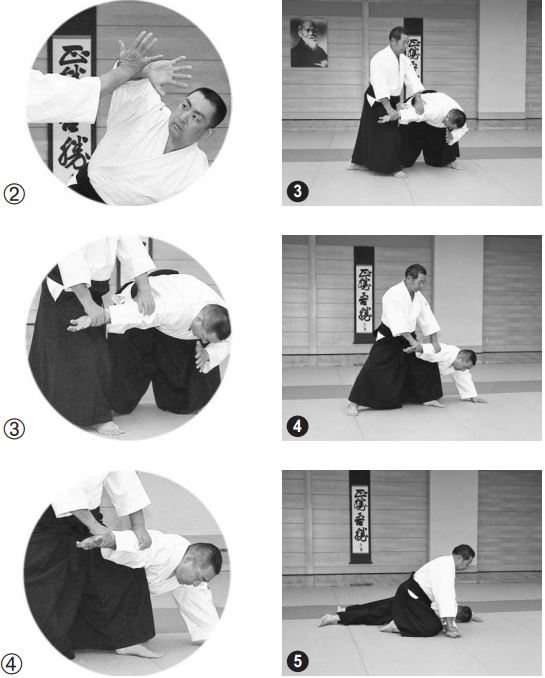
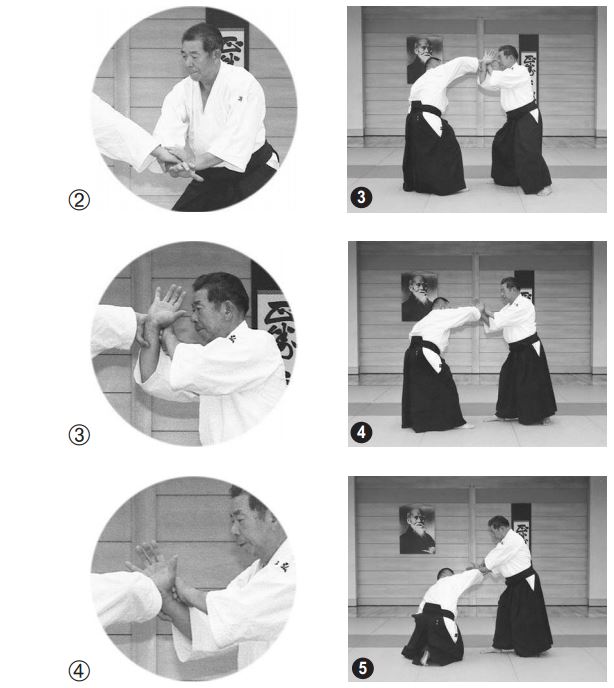
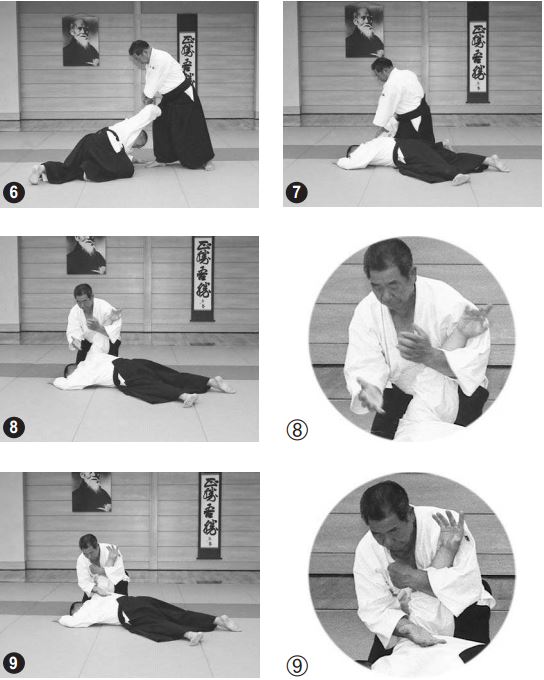
In the below pictorial demonstration, Morihiro Saito provides instruction on the basic omote application of the technique. Notably in the basic application the nage strikes first.

ikkyo-1-omoteikkyo-2


Shomenuchi ikkyo (ura) – Takemusu Aikido, Vol. 1 

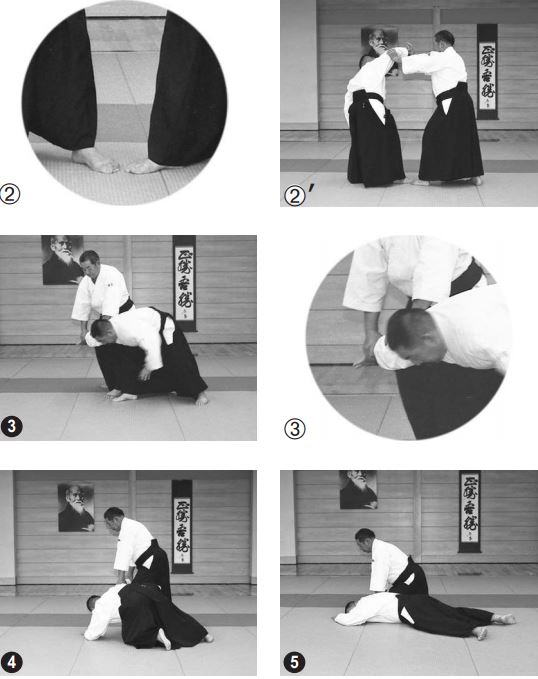
In the below pictorial demonstration, Morihiro Saito provides instruction on the basic ura application of the technique. Notably in the basic application outlined below the nage strikes first.

However, the basic ura version is also able to be applied if the nage initiates the strike first.    In the Founder’s 1938 manual it states “When your opponent strikes first with shomen, turn around the attack with irimi tankan, use your right hand to receive the blow and then control your opponent as described..”.
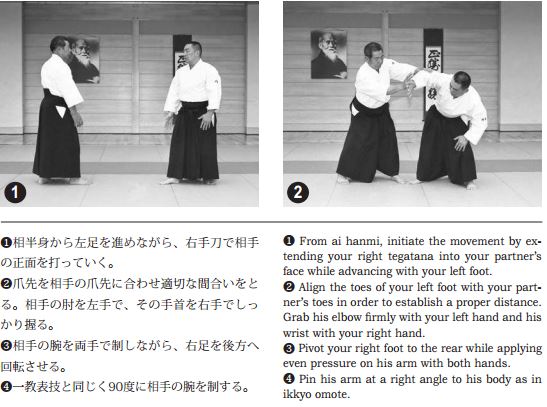
shomen-ikkyo-ura-1shomen-ikkyo-ura-2


  • Ikkyo pin

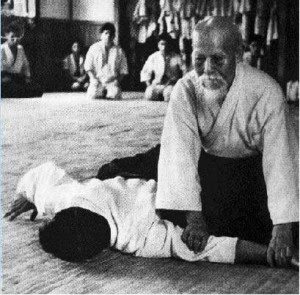
The pin for this technique is often seen done with a form of nikyo pin.  This is not in fact the correct pin.  In the below picture, O’sensei demonstrates the pin for shomenuchi ikkyo.

Osensei ikkyo-pinikkyo in 2 o sensei_1-300x295


In his 1933 text “Budo“, Master Morihei Ueshiba (O’sensei) also states that “when pinning your opponent to the ground it is essential that his arm be at a right angle to his body” (see picture).

  • Uke’s arm remains horizontal and in front of nage’s centre

The uke’s arm remains horizontal in the second part of the technique.  The uke’s hand should not be higher than their shoulder or vice versa. The uke’s arm always remains in front of the nage’s centre.

This is the case regardless of whether the technique is performed standing or where uke and nage are both kneeling (suwari waza).

  • Footwork for ki no nagare practice

In the following video Chicko Sensei uses the sword to demonstrate the footwork for entering for omote applications in (ki no nagare) free flowing practice. Ura footwork is also explained.


  • Shomenuchi ikkyo – Other Aiki principles for ki no nagare practice

In the below video Chicko Xerri Sensei (6th Dan AKI Aikikai) provides instruction on some of the key Aiki principles that underpin practice of  Shomenuchi ikkyo for free flowing practice (ki no nagare).

Our dojo is part of the Fudoshin Australia Group of dojos  operating under the guidance and mentorship of Chicko Sensei.

The technical aspects underpinning dynamic practice of shomenuchi ikkyo are further explored in the below instructional video featuring Yoshimitsu Yamada Sensei (8th Dan Aikikai).  The uke is a young Donovan Waite Sensei (7th Dan ).

  • Alternate atemi application – Aikido Warrior Fudoshin Dojo

In the below video students from our dojo demonstrate an application of the technique where the elbow is used by the nage to strike and take the initial balance of the uke.


  • Demonstration by Morihei Ueshiba, Founder of Aikido 


  • Shomenuchi ikkyo – Zagi Waza

In the below video Chicko Xerri Sensei explains the Aiki principles for shomenuchi ikkyo when it is practised from zagi waza/suwari waza (ie where both nage and uke are kneeling).


Ian Grant
Dojo Cho
Aikido Warrior Fudoshin Dojo, Brisbane


Training notes: Ai hanmi katatedori nikyo

nilyo 2Nikyo techniques involve the application of a painful pronating or adductive wristlock to subdue or pin an attacker.  They are a common feature in the syllabus of most Aikido schools.

Nikyo techniques can be used to address a wide variety of attacks.  They are particularly effective in circumstances where the uke attempts to grab the clothing or wrist of a nage (as a prelude to follow up strike).

Our dojo is a Fudoshin dojo operating under the guidance and mentorship of Chicko Xerri Sensei 6th Dan AKI (Aikikai).

In the below video Chicko Sensei  explains the sword movements and Aiki principles  which underpin the application of Ai hanmi katatedori nikyo. This form of nikyo is applied in response to an attack in the form of a cross hand grab.

Depending on the school, Ai hanmi katatedori nikyo is also referred to as Kosadori nikyo.


ADDITIONAL NOTES

  • Alternate application (1) Morihiro Saito Sensei

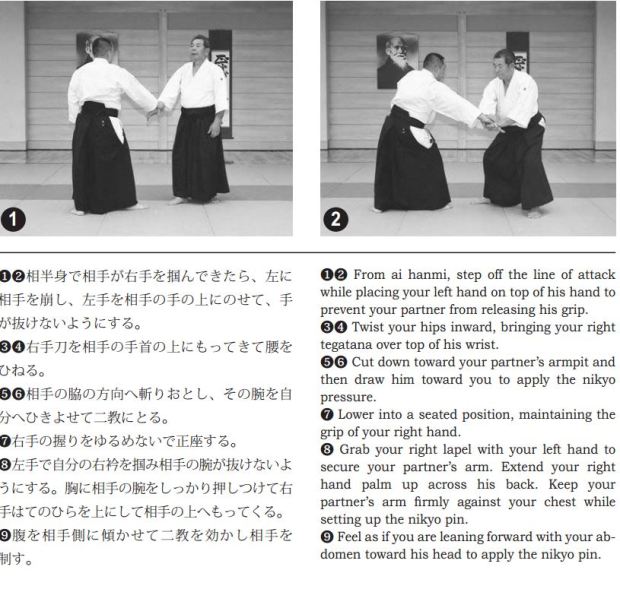
See below a photo demonstration (including description) and video of Morihiro Saito Sensei (9th Dan) explaining the fundamental elements of Kosadori nikyo as practised by O’sensei in the immediate post war period of his training life.

saito-nikyo

saito-nikyo-2

saito-nikkyo-3


  • Alternate (Ki no nagare) application (2) – London Aikido Club

In the below video Sensei Andy Hathaway demonstrates and provides instruction on Kosadori nikyo as practised at the London Aikido Club.


  • Alternate application (3) 

In the below video Sensei Andy Hathaway of the London Aikido Club demonstrates and provides instruction on an alternate takedown for Kosadori nikyo.


Alternate application (4) – Sensei Andy Sato


  • Brief Biography – Morihiro Saito Sensei (1928-2002)

saito_seiza_260Morihiro Saito Sensei’s  practice of Aikido spanned 56 years and he is one of the most important teachers in Aikido history.  Saito Sensei was a live-in student of O’sensei for more than 20 years at his home dojo in Iwama, Japan.

Saito Sensei spent his teaching life dedicated to preserving the technical style of Aikido as practised and shown to him by O’sensei in the post-war period.  Without his commitment to preserving the Aikido of the Founder and extensive efforts to record and document his teachings, much of the Aikido of O’sensei may have been lost.

Have a great week

Ian Grant
Doj Cho
Aikido Warrior Dojo


Training notes: Zagi waza shomenuchi ikkyo

O sensei - Suwari WazaZagi waza (also referred to as suwari waza) is a form of Aikido practice performed from the initial position of nage and uke sitting opposite and facing each other while kneeling  (seiza). This type of practice is particularly useful for developing skills relevant to maintaining and taking balance, moving the body off-line and as a single unit, leverage principles, breath power and keeping centre line.

In our dojo, suwari waza is practiced at most classes. Initially, the typical form of practice is static in nature and involves the uke holding the nage’s wrists with each hand. This static form of practice is referred to as zagi waza kokyu ho. 

As we progress in our studies, other forms of attack are added to our zagi waza practice including responses to strikes.

In the below video, Chicko Xerri Sensei (6th Dan AKI Aikikai) explores some of the key Aiki principles underpinning the practice of zagi waza shomenuchi ikkyo.  There are many recordings of the Founder of Aikido demonstrating this particular form of zagi waza which is performed in the context of a downward strike to the temple (shomenuchi).


ADDITIONAL NOTES

  • Zagi waza shomenuchi ikkyo – technical notes

The below video features suwari waza when responding to a straight strike to the centre of the head (shomenuchi). The demonstrated technique (performed by Yoshimitsu Yamada Sensei) is suwari waza shomenuchi ikkyo.


  • Suwari waza shomenuchi ikkyo – Seishin no Shugyo Dojo, Tasmania 

The below demonstration is by Peter Kelly Sensei, Seishin no Shugyo Dojo, Tasmania. The source material was kindly provided courtesy of Bill Hely.

Ian Grant
Dojo Cho
Aikido Warrior Dojo