Aikido Warrior

Training notes: Katatedori kokyu ho

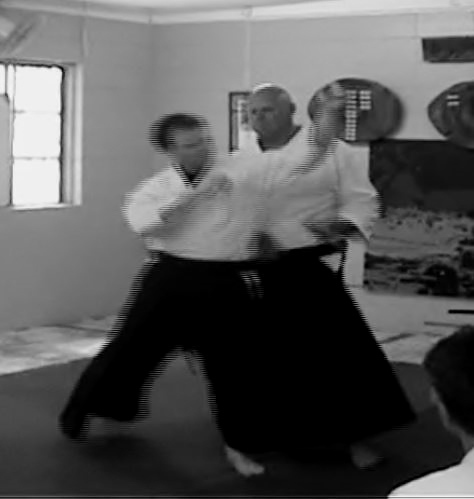
OSenseiTaiNoHenkoIn the below videos Morihiro Saito Sensei (1928-2002) demonstrates the basic  version of Katatedori kokyu ho.

The application is performed from a single hand grab (katatedori) and is categorised as a breath exercise (kokyu ho) or breath throw (kokyu nage).

Kokyu ho exercises are used in Aikido to assist in developing internal power.  They can also be techniques in themselves (kokyu nage) or form key aspects of other techniques.  At higher levels of practice kokyu ho principles form part of every technique.


ADDITIONAL NOTES

  • Technical details


  • Katatedori kokyu ho – Alternate application (1)

In the following video Donovan Waite Sensei (7th Dan Aikikai) demonstrates an alternate application of katatedori kokyu nage.  Waite Sensei’s instruction emphasises the importance of connection.  Also of note in this version of the technique is the use of the elbow to effect balance and the pushing away of the uke to complete the technique.


  • Alternate application (2) – Peter Brady Shihan

In the below video, Peter Brady Shihan (7th Dan Aikikai) provides instruction for an alternate application of Katatedori kokyu ho.


  • Alternate application (3) – Donovan Waite Sensei


  • Alternate application (4) – Peter Kelly Sensei 

The below video was recorded at our dojo on 12 August 2015 as part of a special class given by Peter Kelly Sensei of Aikido Yuishinkai (Tasmania) on kokyu ho applications in Aikido practice.


Have a great week.

Ian Grant
Head Instructor
Aikido Warrior Dojo, Brisbane
Training Notes: Irimi principles for munetsuki

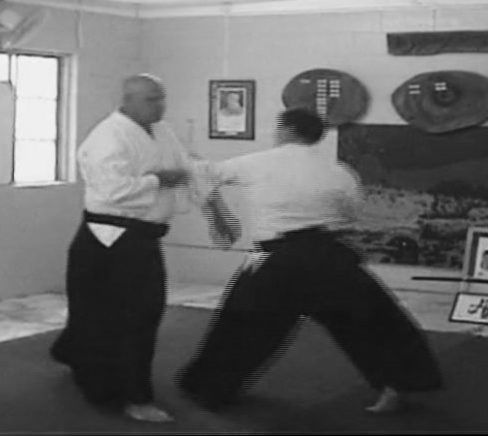
Irimi munetsukiIn the below video, Peter Kelly Sensei, Aikido Yuishinkai,  examines the principles for effective entering (irimi) when dealing with a direct strike to the torso (munetsuki).

A key aspect of the instruction is how to avoid being tracked. This aspect of effective Aikido technique is unfortunately too-often neglected in training.  The fact remains, however, it is surprisingly easy for a uke to track a nage when executing a strike unless the nage meets the strike rather than attempts to avoid it.

There is no doubt that training to meet a strike requires significant repetitive practice to acquire the necessary “mechanical” and timing skills.  Even more challenging, however, is the psychological “rewiring” necessary to retrain our minds to initially enter into an oncoming strike rather than try to dodge or otherwise move away from it.  In the words of O’Sensei – “One should be prepared to receive ninety-nine percent of an enemy’s attack and stare death right in the face in order to illumine the path.”

Have a great week.

Ian Grant
Dojo Cho
Aikido Warrior Dojo, Brisbane

Training notes: Deflection principles for Jodan tsuki

IrimiIn the below video, Peter Kelly Sensei (Chief Instructor, Aikido Yuishinkai), examines the principles for deflecting a direct strike to the face (Jodan tsuki).

The type of training demonstrated in the video is strongly advocated at our dojo. It is grounded in in underpinning philosophy that Aikido principles and martial application should be studied hand in hand, and in effect should inform each other.  The demonstrated method of deflection method is based on thrust and cut bokken movements, which in turn draw on skills developed through our weapons katas.


ADDITIONAL NOTES

  • Jodan tsuki

jodantsuki


All the best

Ian Grant
Head Instructor
Aikido Warrior Dojo


Training notes: Yokomenuchi irimi nage

In the below video Morihiro Saito Sensei (1928-2002) provides instruction on the traditional version of  yokomenuchi irimi nage as practised by O’Sensei (the Founder of Aikido) in the immediate post-war period of his life.


ADDITIONAL NOTES

  •  Alternate application (1) – Yoshimitsu Yamada Sensei 

In the below videos Yoshimitsu Yamada Sensei (8th Dan Aikikai) demonstrates and provides instruction for the basic version of Yokomenuchi irimi nage.


  • Alternate application (2) – Andy Sato Sensei 


  • Alternate Application (3) – Ki aikido – Aikido Yuishinkai 

In the below video Master Koretoshi Maruyama, Founder of Aikido Yuishinkai, demonstrates and provides instruction on how to perform  yokomenuchi irimi nage (ura) as practiced in Aikido Yuishinkai.

Ian Grant
Dojo Cho
Aikido Warrior Dojo

Ryotedori taninzugake demonstration: Master Koretoshi Maruyama

Maruyama Sensei - advanced techniqueIn the below video, Master Koretoshi Maruyama, Founder of Aikido Yuishinkai, gives a demonstration of ryotedori taninzugake.

In our School, taninzugake (or free form practice) is commonly practiced at the end of each class.  This type of practice allows the nage to respond to the selected attack type by using any technique they so choose.  The attack type in the video is ryotedori, which is a 2 hand wrist held from the front.

Ryotedori taninzugake forms part of the Aikido Yuishinkai grading syllabus for 1st kyu (brown belt) gradings.

Ian Grant
Head Instructor
Aikido Warrior Dojo