Aikido training

Training notes: Tachi dori shomen giri kokyu nage

In the below video Aikido Warrior Dojo seniors demonstrate and explain key aspects of the Aikido technique shomen giri kokyu nage.  The technique is demonstrated as a response to a downward strike to the head (shomen) where the uke is armed with a wooden sword (bokken).


ADDITIONAL NOTES

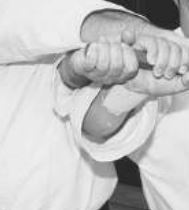
  • Hand position on hilt of the bokken

Bokken tori 1


  • Placement of the elbow

Bokken3JPG


  • Tachi dori shomen giri kokyu nageA deeper look

In the below video, Peter Brady Shihan (7th Dan Aikikai) provides more detailed instruction on the subject version of Bokken tori shomenuchi kokyu nage .  While Brady Sensei is not part of our school, the method of applying the techniques is very similar (if not the same) as that practised in our dojo.


Have a great week.

Ian Grant
Dojo Cho
Aikido Warrior Dojo


Budo (1938) – Jo dori rokkyo

rokkyoIn 1938 Master Morihei Ueshiba, the Founder of Aikido, finalised the 2nd of his 3 technical texts.  Titled “Budo“, the text contains a sampling of techniques from a wide range of attacks, including grabs, strikes and attacks from different weapons.  “Budo” is an important reference point for our practice at the dojo.

The below video features a photographic demonstration of jo tori rokkyo (Technique 41) as it appears in “Budo“.  Rokkyo is an Aikido arm bar technique and is commonly used to disarm a uke who has a weapon (in this case a wooden staff referred to as a jo).   Also included in the video is a demonstration of the technique by Morihiro Saito Sensei who was a direct student of the Founder for more than 20 years.


ADDITIONAL NOTES

  • Jo dori rokkyo –  Key principles for application 

In the below video, Peter Brady Shihan (7th Dan Aikikai) provides instruction on jo tori rokkyo consistent with that shown in the “Budo” text.  While Brady Sensei is not part of our school, his method of application is the same as that practised in our dojo.

Have a great weekend.

Ian Grant
Dojo Cho
Aikido Warrior Dojo


Budo (1938) – Tanto dori munetsuki kotegaeshi

morihei-ueshiba-budo-kotegaeshiIn 1938 Master Morihei Ueshiba, the Founder of Aikido, finalised the 2nd of his 3 technical texts.  Simply titled “Budo“, the text contains a sampling of techniques from a wide range of attacks, including grabs, strikes and attacks from different weapons.  “Budo” is an important reference point for our practice.

The below video features a photographic demonstration of tanto tori munetsuki kotogaeshi (Technique 33) as it appears in “Budo“.  The principles underpinning the technique (aside from the disarm) are similar to the unarmed version.  Also included in the video is a demonstration of the technique (including a variation with atemi) by Morihiro Saito Sensei who was a direct student of the Founder for more than 20 years.


ADDITIONAL NOTES

  • Principles underpinning munetsuki kotegaeshi

In the below video Morihiro Saito Sensei gives detailed instruction for the traditional application of munetsuki kotegaeshi.  The instruction applies equally to the armed and unarmed versions of the technique.


Have a great weekend.

Ian Grant
Dojo Cho
Aikido Warrior Dojo


Training Notes: Tanto dori – Yokomenuchi kokyu nage

Yokomenuchi kokyu nage 3In the below video Koretoshi Maruyama SEnsei, Founder of Aikido Yuishinkai, demonstrates and provides instruction on the Aikido technique, tanto tori yokomenuchi kokyu nage. 

The technique is performed as a response to a yokomenuchi strike with a tanto (wooden knife) to the side of the neck.  The tanto for this technique is held as if holding an ice pick.  The blade is facing upwards at the commencement of the attack.


ADDITIONAL NOTES

  • Yokomenuchi kokyu nage – Key principles

Yokomenuchi kokyu nage can be applied to any downward strike to the side of the head, regardless of whether the uke is armed with a tanto.  In the below video Koretoshi Maruyama Sensei examines in detail the key aspects of this technique.  The instruction given is equally applicable to circumstance where the uke is also armed with a tanto.


  • Yokomenuchi kokyu nage – Origins

Yokomenuchi kokyu nage (irimi) has a long history in Aikido. The technique appears as technique number 42 in O’senseis first technical manual “Budo Renshu” (1934).  The notable difference in this early version is that the nage cuts down through the uke‘s neck and also cuts down and then hold’s the wrist of the uke’s attacking arm.  (See O’senseis drawings below).

However, the kokyu ho principles necessary to effectively apply the technique remain the same.

Drawing (1) No 42

Drawing 2 no 42


Kokyu nage - OsenseiIn O’sensei’s 2nd manual “Budo” (1938) the roles of nage and uke for the technique are described as follows:

Uke: Deliver a yokomen strike with your right hand.  “Tori (i.e. nage): Step forward on your left foot and use your left te gatana (i.e. hand sword) to neutralise your opponent’s attack, simultaneously striking his face  (and down him).”


  • Kokyu ho principles underpinning technique

Kokyu ho exercises are something that we do a lot of at our dojo as a means of developing internal strength in our techniques.  Kokyu ho exercises were the traditional method used by O’sensei to develop “ki power” in his Aikido.

In the below video, Morihei Saito Sensei demonstrates and explains the kokyu ho exercise relevant to yokomenuchi kokyu nage (irimi).


Have a great week

Ian Grant
Dojo Cho
Aikido Warrior Dojo, Brisbane


Budo (1938) – Tanto dori munetsuki kokyu nage

iriminageIn 1938 Master Morihei Ueshiba, the Founder of Aikido, finalised the 2nd of his 3 technical texts.  Simply titled “Budo“, the text contains a sampling of techniques from a wide range of attacks, including grabs, strikes and attacks from different weapons.  “Budo” is an important reference point for our practice at Aikido Warrior Dojo.

The below video features a photographic demonstration of tanto tori munetsuki kokyu nage (Technique 32) as it appears in “Budo“.  The technique is very similar to irimi nage with the notable exception that in the demonstrated technique the nage’s hand is placed under the uke’s chin.   Also included is a demonstration of the technique by Morihiro Saito Sensei who was a direct student of the Founder for more than 20 years.


Ian Grant
Dojo Cho
Aikido Warrior Dojo