Ian Grant

Aikido and the big picture

OLYMPUS DIGITAL CAMERAThere is an often cited quote from the Founder of Aikido, Master Morihei Ueshiba (O’Sensei), that goes along the following lines:

Aikido is not a technique to fight and defeat the enemy. It is a way to reconcile the World and make human beings one family.

I have often pondered on this statement and wondered how it is possible that a martial art or any form of budo for that matter could hope to achieve such a lofty goal.

In the context of Aikido, its probably not that surprising that I can never recall anyone ever talking about World peace or anything like it. Our efforts on the mat are exclusively focussed on developing our skills, working on ways to improve our body structure and basically enjoying our practice. After class many of us then head out for a coffee, have a few laughs and then return to our regular lives. World reconciliation just never comes up.

OLYMPUS DIGITAL CAMERAIt then struck me the other day as I was leading a class that I had missed something obvious. Looking around the dojo there were people of different ages, background, gender, physical ability, work life, etc. Everyone was working together to help each other improve their skills and understanding, be safe and just have fun. In short, they were just enjoying each other’s company and learning from their differences.

I then realised that this is what O’Sensei was probably talking about.

Until next time

Ian
Aikido Warrior Dojo – First class photo album

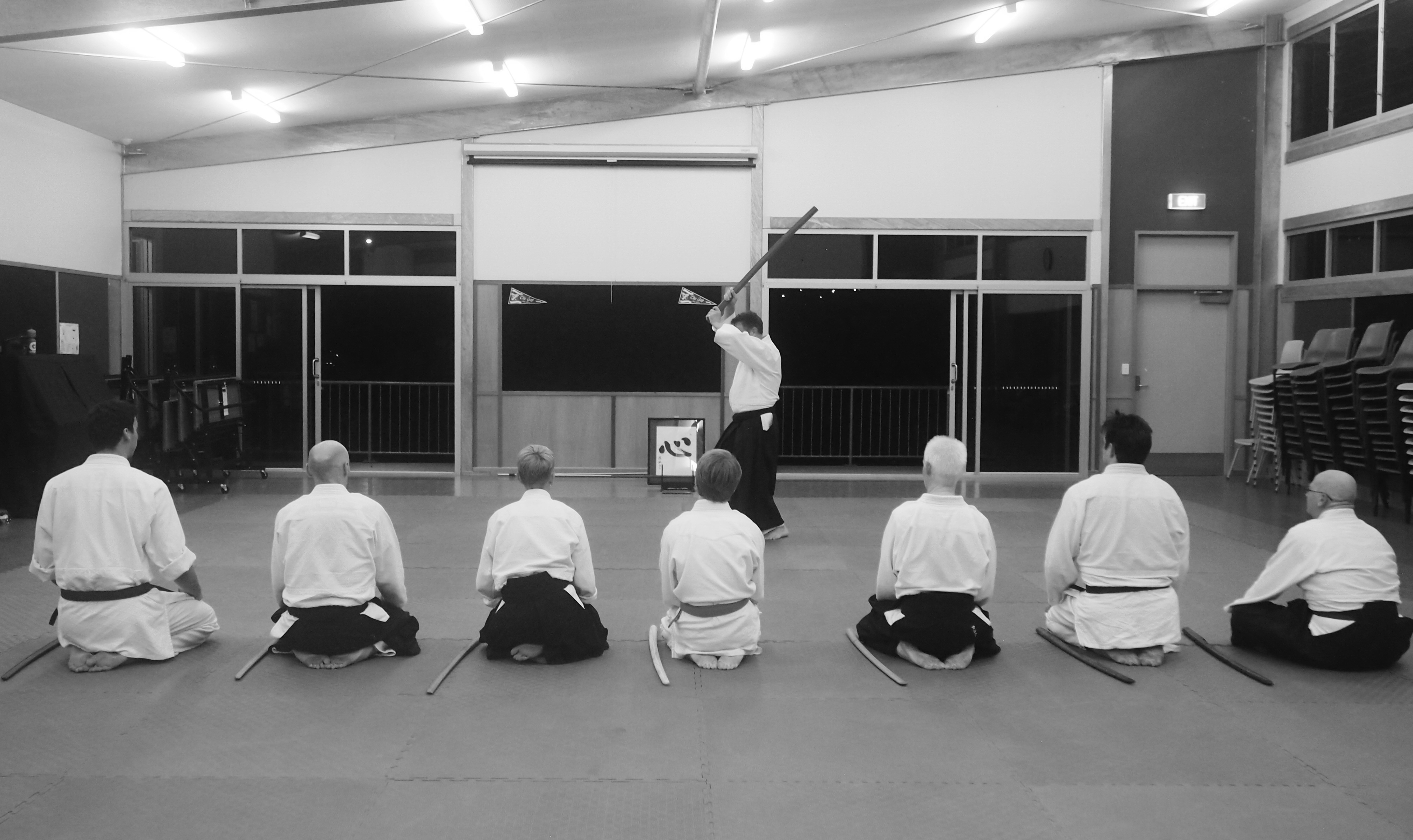
Saturday was the first adults class for Aikido Warrior Dojo  at our new premises  in the leafy north-west Brisbane suburb of The Gap.  With plenty of open space, nice facilities and a high ceiling, it ticked all the boxes for a positive, safe and pleasant place to train.

Supported by visiting friends from Aikido Republic Dojo and the Hills District Dojo, we ended up with a full mat. Our training time, which proved to be a most energetic session, was very much focussed on rediscovering lessons learnt from the last 2 Aikido Yuishinkai national seminars and exploring new applications for them.

With such an auspicious occasion at hand, the camera was rolling.  Without further ado, these were the results.

Thanks to everyone who attended for training safely, with an open mind and an explorer’s heart.

Yours in Aiki

Ian Grant Sensei
Head Instructor
Aikido Warrior Dojo

So why open a dojo?

The decision to open up a new Aikido dojo is certainly not for the faint of heart.  In the modern world, its establishment alone is filled with many challenges and responsibilities, including arranging insurance, dojo space, affiliations, mats, licences, management and financial systems, compliance with legislative obligations, policies and procedures, advertising, …. and the list goes on.

OLYMPUS DIGITAL CAMERAWith all these issues, and the fact that it’s much easier to be a student or guest teacher at someone else’s dojo, the most common question I get asked is why did you open up a dojo?

For me the answer to this question is simple – it’s something I’ve dreamed of doing since the first day I stepped on a martial arts mat some 40 or so years ago. Back then it was a Judo mat, but as time went on I transitioned into Judo’s sister art, Aikido.  While the martial art changed, the dream to start my own dojo never waned.

So what is it about a dojo (or “place of the way”) that makes it so special?  The obvious answer is that it’s a place where you get to learn, explore, share, and practice your Japanese martial art of choice with those who have a similar passion and interest.

For me, however, a dojo is more than this. It’s a place where we can leave our problems at the front door and for the relatively short time that we are there, live in a world which is positive, encouraging, free of politics, welcoming, non-discriminatory and fun.

OLYMPUS DIGITAL CAMERAThe way I see it, the world is full of institutions, systems and individuals apparently hell-bent on putting people down and stripping them of their confidence. A dojo is an escape from this. My suggestion to anyone who has walked into an Aikido dojo and experienced feeling worse about themselves than when they went in – find another dojo.

And so when I opened the doors of Aikido Warrior Dojo for the first time on Saturday morning 8 March 2014, I had no doubts about what I was doing – this is where I was supposed to be. The fact that we were immediately greeted by 2 “welcome swallows” who decided to join us while we set up seemed only appropriate.

Finally a big thank you to everyone who helped set up Aikido Warrior Dojo in the last couple of weeks.  I couldn’t have done it without you.

Ian Grant Sensei
Head Instructor
Aikido Warrior Dojo

One Saturday morning – Aikido in stills

OLYMPUS DIGITAL CAMERAThere are plenty of blogs on the internet devoted to reports about Aikido seminars and other special events.  However, what is not seen so often, are blogs dedicated to a regular Aikido class. That is, the type of class most of us train at each week.

This month’s blog is about one such class that I lead at Everton Hills Dojo on the outskirts of Brisbane, Australia. The date: Saturday, 7 September 2013.

I was going to write a detailed overview of the class.  Then I thought, “what the heck”, a picture (or in this case a photo) paints a 1000 words, so I did a photo library instead.

When you look at the pics, keep in mind most of us are over 35 (some into our 50’s), hold full-time jobs and practice Aikido around our life commitments. Also, those without a hakama (i.e. the black Japanese pants) have been practising less than 2 years.

All in all – I think we do pretty well.

This slideshow requires JavaScript.

Ian Grant

Aikido training – Drawing the line between cooperative and pointless practice

The need for a cooperative dynamic in Aikido practice is widely acknowledged by most of us who practice the Art.  Aside from the non-competitive philosophy that underpins Aikido, there is the practical reality that many techniques would be unsafe to practise without at least some element of compliance from our training partner.

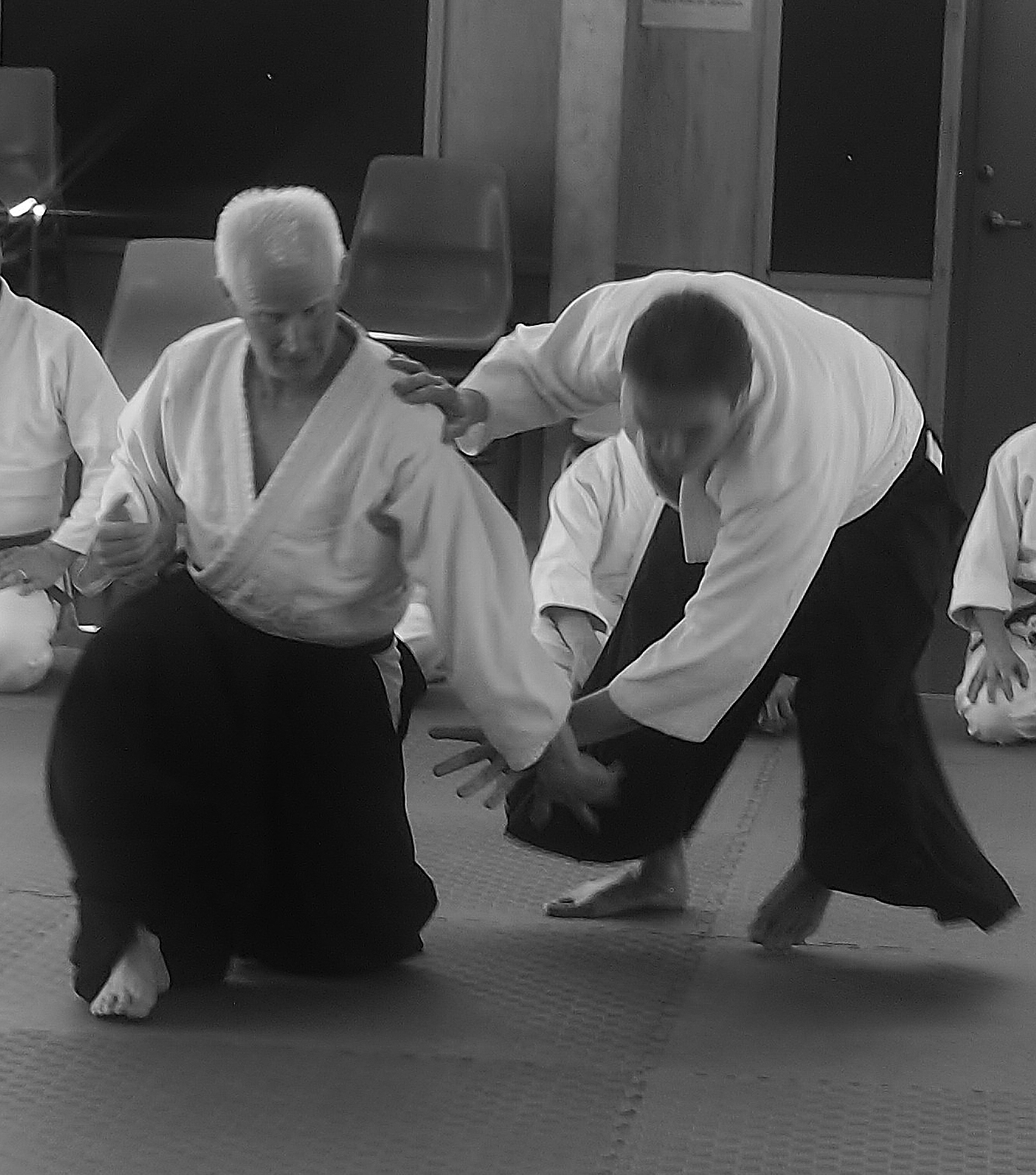
OLYMPUS DIGITAL CAMERAA question worthy of consideration, however, is where to draw the line between cooperative practice and pointless practice (i.e. practice that removes or substantially diminishes the opportunity for both parties to learn).

For example, having our training partner just “tank” at the first opportunity removes the learning opportunity for both the nage and the uke. The same could be said where an often well-meaning training partner just rolls out of a technique regardless of whether the person supposedly executing it has functionally done anything to cause such a reaction.

For training to have learning validity, I think a good starting point is an acknowledgement that Aikido practice is between two equals.  That is, it’s not between a human and a rag doll, or a human and some form of “uke-bag”.

Quite the contrary, Aikido practice involves an ongoing  2 way interaction between the attacking  and responding partners (i.e. the uke and nage) who are acting as equals with a view to enhancing their mutual knowledge and skills. This is so, whether it be in the form of kata or free-form practice (taninzugake).

That being said, where one draws the line between 2 equals engaging in productive cooperative practice, as opposed to pointless practice, is something that might cause reasonable minds to differ. Certainly, even the very notion of such a concept as “pointless  practice” imports an element of subjectivity.

OLYMPUS DIGITAL CAMERAHowever, as a working model for uke’s trying to keep on on the right side of the cooperative line, I think a practice methodology whereby the uke acts as follows is not a bad start:

  • The uke does not give up their centre (this is something the nage learns to take, which is not possible if it is sacrificed by the uke);
  • The uke gives the nage their weight to work with (without this, the nage has no sense of the reality of what they are doing).
  • The uke gives an honest attack (e.g. if the attack is a strike to the head, they don’t aim to miss or predict the nage’s response).
  • The uke gives a committed attack  (i.e. the uke follows the attack through to the end and doesn’t stop half way);
  • The uke stays mentally connected with the nage from the beginning through to the completion of the attack (aside from importing an element of realism, this also enhances the safety of the practice);
  • The uke ensures that the intensity of the attack is commensurate with the abilities of the nage, the skills of the uke to safely respond and the purpose of the practice.

How far the uke can go beyond this line before degenerating into competitive and potentially dangerous practice is worthy of an article on its own.  Certainly, enthusiastic free form practice can inadvertently and quite quickly slip over into competitiveness and potential danger.  Fortunately, one of the roles of the class sensei is to intervene at this point and save us from ourselves!

Ian Grant