In the below video Master Koretoshi Maruyama, Founder of Aikido Yuishinkai, demonstrates and provides instruction for the Aikido technique munetsuki kotegaeshi as practised in Aikido Yuishinkai.
Ian Grant
Head Instructor
Aikido Warrior Dojo
In the below video Master Koretoshi Maruyama, Founder of Aikido Yuishinkai, demonstrates and provides instruction for the Aikido technique munetsuki kotegaeshi as practised in Aikido Yuishinkai.
Ian Grant
Head Instructor
Aikido Warrior Dojo
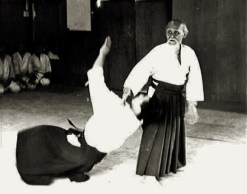 In the below video Master Koretoshi Maruyama, Founder of Aikido Yuishinkai, demonstrates and provides instruction for the Aikido technique katate kosadori kokyu nage (reitai level) as practised in Aikido Yuishinkai.
Katate kosadori kokyu nage is categorised as a “breath throw” (kokyu nage) in Aikido practice and is trained from a traditional attack in the form of a cross-hand grab (katate kosadori).
Training at reitai level is sometimes described as “no touch” Aikido. The difficulty with this descriptor is that it suggests something pseudo mystical is happening which could not be further than the truth. The uke falls without being touched for no other reason than to avoid being “palmed in the face” (for want of a better description) by a centred nage.
ADDITIONAL NOTES
Katate kosadori kokyu nage – Other levels of practice
For training notes on katate kosadori kokyu nage as practised at kotai, juntai and ryutai levels in Aikido Yuishinkai see: Training notes: Katate kosadori kokyu nage.
Have a great week
Ian Grant
Head Instructor
Aikido Warrior Dojo
All the best
Ian Grant
Head Instructor
Aikido Warrior Dojo
 Multiple person grabs are a common training tool in Aikido and are have a long tradition in our Budo. The Founder of Aikido (Master Morihei Ueshiba) regularly demonstrated and practised this form of training. There are numerous videos of him doing so, the earliest going back to the 1930’s.
Two person grabs in Aikido practice are typically referred to as ninindori. Ninindori represents the basic form of multiple grab practice. As a student progresses additional attackers can be added to make the exercise more challenging.
In the below video, Master Koretoshi Maruyama, Founder of Aikido Yuishinkai, demonstrates how to use kokyu nage (a “breath throw”) to escape when ukes in ninindori grab each arm of the nage.
All the best
Ian Grant
Head Instructor
Aikido Warrior Dojo
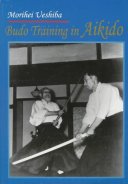 Master Morihei Ueshiba (O’sensei), the Founder of Aikido, authored 3 instructional manuals in his lifetime. The first “Budo Training in Aikido” (originally called “Budo Renshu“) was published in 1933.
“Budo Renshu” contains 166 techniques, all of which are accompanied by hand drawings and training notes. The techniques in the manual represent an interesting blend of Daito Ryu and what would become to be known as Aiki Budo (and then later Aikido).
In the below video, Dojo senior Jeremy Gehrke draws on his studies of Aikido and Daito Ryu to demonstrate some of the techniques found in Budo Renshu and some of their extended applications. Please note the demonstrations are informal only and done with minimal planning or preparation.
Ian Grant
Head Instructor
Aikido Warrior Dojo
 In the below video Koretoshi Maruyama Sensei demonstrates and provides instruction for the Aikido technique katate kosadori kokyu nage as practised in Aikido Yuishinkai. The technique is categorised as a “breath throw” (kokyu nage) and is trained from a traditional attack in the form of a cross-hand grab (katate kosadori).
Katate kosadori kokyu nage has a long history in Aikido practice. There are numerous recordings dating as far back as the 1930’s of the Founder of Aikido (Master Morihei Uesiba) demonstrating the technique.
ADDITIONAL NOTES
In the below video Maruyama Sensei demonstrates and provides instruction for the Aikido technique katate kosadori kokyu nage (reitai level) as practised in Aikido Yuishinkai.
Training at reitai level is sometimes described as “no touch” Aikido. The difficulty with this descriptor is that it suggests something pseudo mystical is happening which could not be further than the truth. The uke falls without being touched for no other reason than to avoid being “palmed in the face” (for want of a better description) by a centred nage.
The above video demonstrates and provides instruction for katate kosadori kokyu nage as practised at ryutai or free flowing level. However, it is often difficult for students to initially practice a technique at this level.
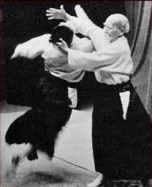 To assist students to learn the basic shapes and principles for free flowing practice, preliminary exercises are practised which in essence are simplified versions of the flowing technique. They are also practised static and cooperatively. These learning exercises are referred to as practising a technique at kotai and juntai levels. It is emphasised that these levels of practice are only exercises to learn principles applicable to Aikido practice, they are not Aikido techniques.
In the below video Maruyama Sensei provides detailed instruction for katate kosadori kokyu nage at both kotai and juntai level.
All the best
Ian Grant
Dojo Cho
Aikido Warrior Dojo
 Aikido Warrior Dojo
You must be logged in to post a comment.