 Direct strikes to the forehead (shomenuchi) are a common form of striking technique (atemi) in Aikido practice. However, while there are a variety of effective ways to deal with these types of attacks, none include “blocking” the attack with the same attack.
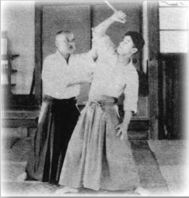
Blocking a shomenuchi with a shomenuchi places the nage in a 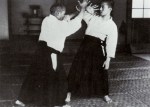 significantly disadvantaged position as it is very difficult to break the uke’s balance (kuzushi) at first contact. This is due to the fact that the uke started their strike first and in all probability is going to be in the best strategic position (see photo to left). This is particularly so if they are centred, have the size advantage or armed with a weapon.
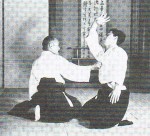 An alternate (albeit not the only) option to address a shomenuchi is to enter and strike the centreline of the uke‘s undefended torso (see photo to left). Key aspects of this option are explored in the below video featuring Peter Kelly Sensei, Chief Instructor of Aikido Yuishinkai Australia.
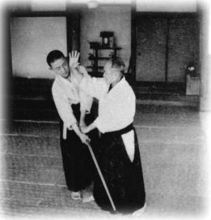
 Notably, in O’sensei’s text Budo (1936) there are numerous examples where O’sensei essentially initiates a strike to cause the uke to defend themselves by using shomenuchi. This however is a ruse to set up O’Sensei’s true objective which is to strike the uke‘s centre line as the precursor to executing a technique. Examples where this tactic is used include shomenuchi irimi nage, shomenuchi ikkyo (illustrated in photo above) , shomenuchi kotegeashi and katadori menuchi techniques.
Have a great week, particularly those travelling to this year’s annual Aikido Yuishinkai seminar with Maruyama Sensei in Hobart (25-29 November 2015).
Ian Grant
Head Instructor
Aikido Warrior Dojo, Brisbane


 Aikido Warrior Dojo
You must be logged in to post a comment.