Aikido The Gap

Training notes – Ushiro ryotedori ikkyo (2) – Ki no nagare

In the below video, Christian Tissier Shihan (8th Dan Aikikai) demonstrates the omote and ura versions of the Aikido technique ushiro ryotedori ikkyo.

The demonstrations are completed in a dynamic free flowing form whereby the uke commences the attack by proceeding to the front of the nage, grabbing the nage’s wrist and then moving to the rear (with a view to also grabbing the nage’s second wrist).

This form of practice is referred to in some schools as ki no nagare.  In ki aikido schools it is sometimes referred to as ryutai.


ADDITIONAL NOTES

  • Movement and Sword principles

In the below video Chicko Xerri Sensei  (6th Dan Aki Aiki kai) explores the sword principles that underpin the higher level practice of ushiro techniques.  The exploration is particularly applicable to ikkyo applications.

Our dojo is part of the Aikido Kenkyukai Fodoshin Dojos (Australia).  Chicko Sensei is the Shihan for our school.


  • Balance breaking principles – Kuzushi

In the below video produced by Senshin Center Aikido Dojo, balance breaking principles applicable to ushiro attacks are explored. Kuzushi is unfortunately something that is sometimes overlooked in Aikido. The fact remains, however, that it is near impossible to throw a centred uke unless they are either cooperating or overpowered by a significantly larger nage.


  • Alternate application (1) – Chicko Xerri Sensei – AKI Fudoshin Aikido

In the below video Chicko Xerri Sensei explores an alternate option for addressing a ushiro attack whereby the uke is not permitted to move to the rear of the nage. Chicko sensei emphasises the important aiki principle of creating a space to move before attempting an aikido application.


  • Alternate application (2) – Chicko Xerri Sensei – AKI Fudoshin Aikido

In the below video Chicko Xerri Sensei explores a further option for addressing ushiro attacks.  The option readiy sets up the circumstances for an ikkyo application.


  • Ki Aikido

In the below video, Koretoshi Maruyama Sensei provides instruction on Ushiro tekubidori ikkyo as practised in Aikido Yuishinkai.  The method of application is typical of the approach taken by ki aikido schools.


All the best

Ian Grant
Head Instructor
Aikido Warrior Dojo


Breakfall basics class – 15 July 2015

Some video of the “breakfall basics” class held at the dojo on 11 July 2015.

Big thanks to our dojo seniors Matt, Neil, Peter and Jeremy for their assistance in teaching and ensuring practice was safe.

Have a great week.

Ian Grant
Head Instructor
Aikido Warrior Dojo
Related posts


Aikido’s first pillar – Shiho nage

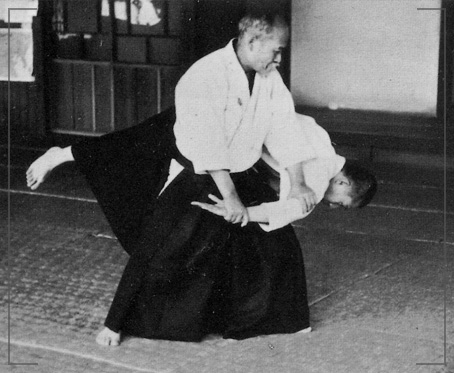
The first of the six pillars of Aikido techniques is shiho nage. This technique represents the gratitude Aikido trainees feel toward life in all four directions and is commonly the first technique learned (but not easily mastered) by students.”
(Master Morihei Ueshiba/John Stevens, The Essence of Aikido, p 115

Ian Grant
Head Instructor
Aikido Warrior Dojo
Related posts:

Working with resistance – Static hand grabs

A standard feature of our practice at the dojo is to train with static hand grabs where strong physical resistance is applied by the uke (the attacking partner). There are many benefits to this type of training, not the least of which is that we have found it to be an effective method of gaining a practical appreciation of the fundamental principles that underlie Aikido based movements and body structure.

morihei-ueshiba-noma-throwPlease be assured that I am not in any way derogating kotai (static) practice where the uke offers full cooperation or at most a dead weight. Far from it and in fact we also include this practice at the dojo. However, if one only practices in this way the risk is the development of an unstated understanding that Aikido can only operate in a static situation with a cooperative uke.

The below video is an informal demonstration of a number of Aikido options for dealing with static hand grab attacks where the attacker is using high levels of physical strength. The demonstrated techniques are performed slowly and with every effort made not to respond with physical strength solutions, but rather responses based on Aikido principles, including those associated with kokyu. The possibility of using atemi (striking) was intentionally excluded to make the exercises more difficult.

Please note the techniques and attack options are not intended to be exhaustive, merely illustrative. The attacks were selected randomly based on what popped into our heads at the time. The Aikido responses were similarly not pre-planned and were selected at random based on what “felt right” to each of us in each circumstance.

Finally, a huge thanks to Eden for dropping down to the dojo and recording the video. Also to my training partner, Jeremy, who graciously agreed to appear in the recording and basically “wing it”.

Ian Grant
Head Instructor
Aikido Warrior Dojo, Brisbane

Training notes: Ai hanmi katate dori ikkyo

oSensei06Opposite side one-hand hold wrist grabs are typically one of the first basic attacks that a new student to Aikido is trained to address.  Although arguably not a particularly martial or common contemporary attack form, learning to neutralise and redirect an attack of this kind can nonetheless be surprisingly challenging both at static and free-flowing level.

Training to deal with wrist grabs is particularly useful for learning and reinforcing many of the basic principles that underpin our Art.  The less aggressive nature of the attack (compared to say a strike) allows the nage (i.e. the receiver of the attack) to more readily focus on such things as correct footwork, moving around the point of contact, basic balance breaking principles, correct posture and movement, maintaining centre and getting off-line.

Cross hand wrist grabs in Aikido practice are referred to as Ai hanmi katate doriKosadori or Katate kosa dori.  The name used depends on the school and some use the terms interchangeably.  Generally speaking, ki aikido schools tend to use the term Katate kosa dori. 

In the below video, Mike Jones Sensei (New York Aikikai) demonstrates and provides instruction on the 2 basic forms (omote and ura) of the Aikido technique ikkyo when applied in response to a static cross hand grab. Further detail on how to apply the technique is provided in the Additional Notes section below.


ADDITIONAL NOTES

  • Kosadori ikkyo omote (Basic) – Morihiro Saito Sensei 

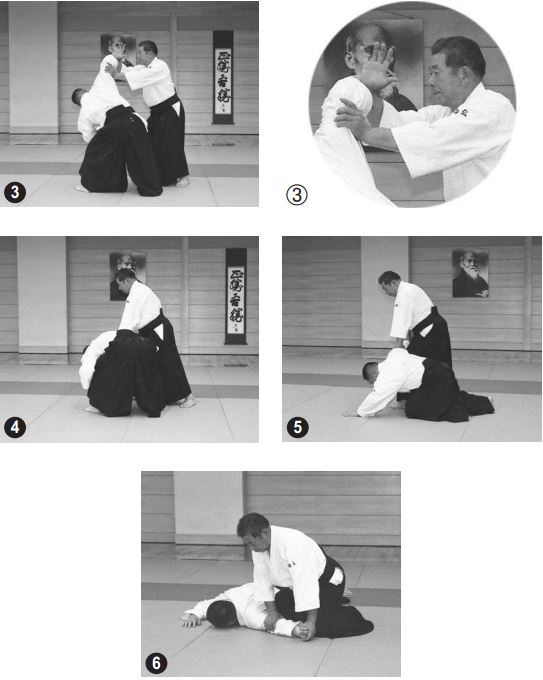
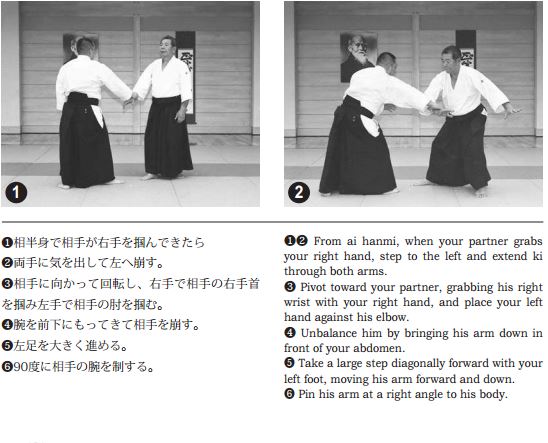
See below a photo demonstration (including description) and accompanying video by Morihiro Saito Sensei (9th Dan) of the key elements that make up the basic form of Kosadori ikkyo omote. 

kosadori-ikkyo-1kosadori-ikkyo-2

*Source: “Morihori Saito’s Complete Guide to Aikido” (2015)

  • Kosadori ikkyo omote (Basic) – London Aikido Club 

The below video provides important training tips by Sensei Andy Hathaway (London Aikido Club) for performing Ai hanmi katate dori/ kosadori ikkyo (omote).


  • Kosadori ikkyo (ki no nagare) – Aikido Warrior Fudoshin Dojo

In the below video seniors from our dojo demonstrate the way we typically practise kosadori ikkyo at ki no nagare (free flowing) level. Notably, the application incorporates a direct entry movement combined with an atemi intent (i.e. an elbow strike) to break the balance of the uke.   As demonstrated in the video, this method of application is more easily learnt by first practising it from shomenuchi ikkyo.


  • Ai hamni katate dori/kosadori ikkyo (ura) – London Aikido Club

The below videos provides important training tips by Sensei Andy Hathaway (London Aikido Club) for performing the traditional version ura version of Ai hamni katate dori/kosadori ikkyo.


Have a great week

Ian Grant
Head Instructor
Aikido Warrior Dojo, Brisbane