Bokken arts are not formally examined as part of the grading syllabus in Aikido Yuishinkaiuntil shodan (black belt). However, due to the many transferable skills that Bokken arts offer in aiding our tai jutsu (unarmed) training it is quite common for students to be introduced to these wooden sword based arts almost from the outset.
Bokken happo giri is an 8 direction shomen cut that makes for an ideal introduction to solo bokken practice. This multi-direction kata is an excellent aid to learning and developing spatial awareness, proper posture, heaven-man-earth body quality, balance and footwork while continually moving and cutting in different directions.
Bokken happo giri is also helpful in developing the ability to maintain focus in all directions while continually turning. This ability is particularly useful when dealing with multiple attacker situations in unarmed practice.
At our dojo we regularly practice 3 different forms of bokken happo giri. These are omote, ura and irimi. All 3 forms involve an 8 way cut, however, the footwork differs in each. Each form directly translates into our tai jutsu practice by automating correct footwork and centred relaxed movement in our Aikido techniques.
The video demonstration below by our Chief Instructor Peter Kelly Sensei is of bokken happo giriomote.
The challenge of modern aikido is that it exists in a world where most of us typically don’t operate under regular physical load in our daily lives. This impacts on the way we move and the body quality that we adopt in making those movements. By way of comparison, the Founder of Aikido was a farmer and was use to working in a very physical environment for most of his life. The result is that what was natural movement and posture for him, and many of the masters of past, is well … not that natural for us.
Recently, a number of us at the dojo have resolved to include heavy bokken training, through the use of a suburito, as part of our regular weapons practice. For those not familiar with the suburito, it’s a heavy bokken that is thicker at the blade than the handle. It is also longer in length than the standard bokken. The benefit of using a suburito for bokken work is that it is a simple and effective method of bringing load into our Aikido practice.
To move the suburito for any length of time (and we are talking minutes) relies on the practitioner abandoning strength based methods and instead using the “natural” principles of posture and movement that form the basis of our Art. The principles to which I refer include being centered, “heaven man earth”, centerline movements, sinking, using major muscle groups to ignite smaller ones, weight transference, “feet move hips”, “silk-reeling”, “yin-yang”’, keeping knees off lock, etc. When these principles are applied, the suburito can be moved with minimum effort.
The effect onbokken kata practice when using a suburito is also quite interesting. I think it would be fair to say that there is an injection of martial integrity introduced into the kata movements. This does not occur because of the weight per se, but rather the disciplined way that you have to move and hold your posture throughout to allow the additional weight of the bokken to be moved with minimum effort. For an example as to how the Aikido Yuishinkai kata “free wielding sword” looks with a heavy bokken see the below demonstration by our Chief Instructor Peter Kelly Sensei.
We have also found that the internal aspects developed using the suburito flow directly on to our unarmed practice. Particularly noticeable benefits include a reduced urge to “muscle techniques” when encountering resistance. The natural reaction is to instead relax and sink. A greater sense of centered movement, both as uke and nage, is also very evident.
Please be assured that I’m not suggesting that the suburito is the be-all and end-all of effective Aikido practice. There are lots of incredibly proficient Aikido practitioners out there who have never even picked up suburito. All I’m saying is that if you are seeking to widen your current training methods for developing the internal principles underpinning our art – its worth a try.
In the meantime, if you’re going to pass me a bokken….better make it a big one.
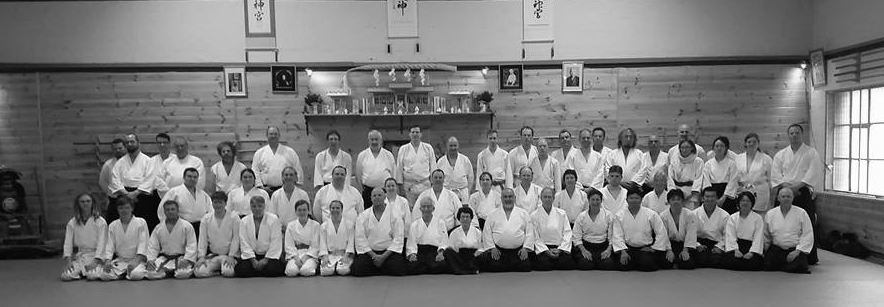
This year’s Aikido Yuishinkai national seminar is now in the history books and will be remembered as one of our finest. It’s been 2 years since Master Koretoshi Maruyama, the Founder of our School, has visited Australia and it was great to have the opportunity to once again have the benefit of his direct teachings.
Our school is particularly fortunate to have Maruyama Sensei as our Founder. Sensei has been practising Aikido for close to 60 years and is one of the few direct students of O’Sensei still actively teaching. A brief summary of his remarkable life in Aikido can be found at this page on our site.
The seminar this year was held at Seishin no Shugyo Dojoin Tasmania. It’s hard to imagine a more perfect setting for Aikido training as there is an undeniable sense of martial arts tradition in the dojo. For those who haven’t had a chance to train there, the walls are filled with a wide array of Samurai and martial arts memorabilia that has to be seen to be believed.
Key themes of this year’s seminar included a focus on:
Natural posture;
Centreline;
Removing unnecessary muscle tension; and
The importance of using gravity to achieve effective technique.
Sensei demonstrated and taught these and other themes through an array of traditional Aikido kata ranging from the basic to the advanced. In addition, there were also some fun segues to explore such things as Bruce Lee’s one inch punch and relaxed palm defensive striking. One of the many highlights for me was the chance to learn the higher level version of Yokomenuchi shihonage which is something I have been keen to explore for some time.
Anyone who decides to host a national seminar in my view deserves a medal. An incredible amount of effort (and accompanying stress) is needed to host one of these events. A big thanks to Peter Kelly Sensei (and his Dojo students) for doing such an amazing job.
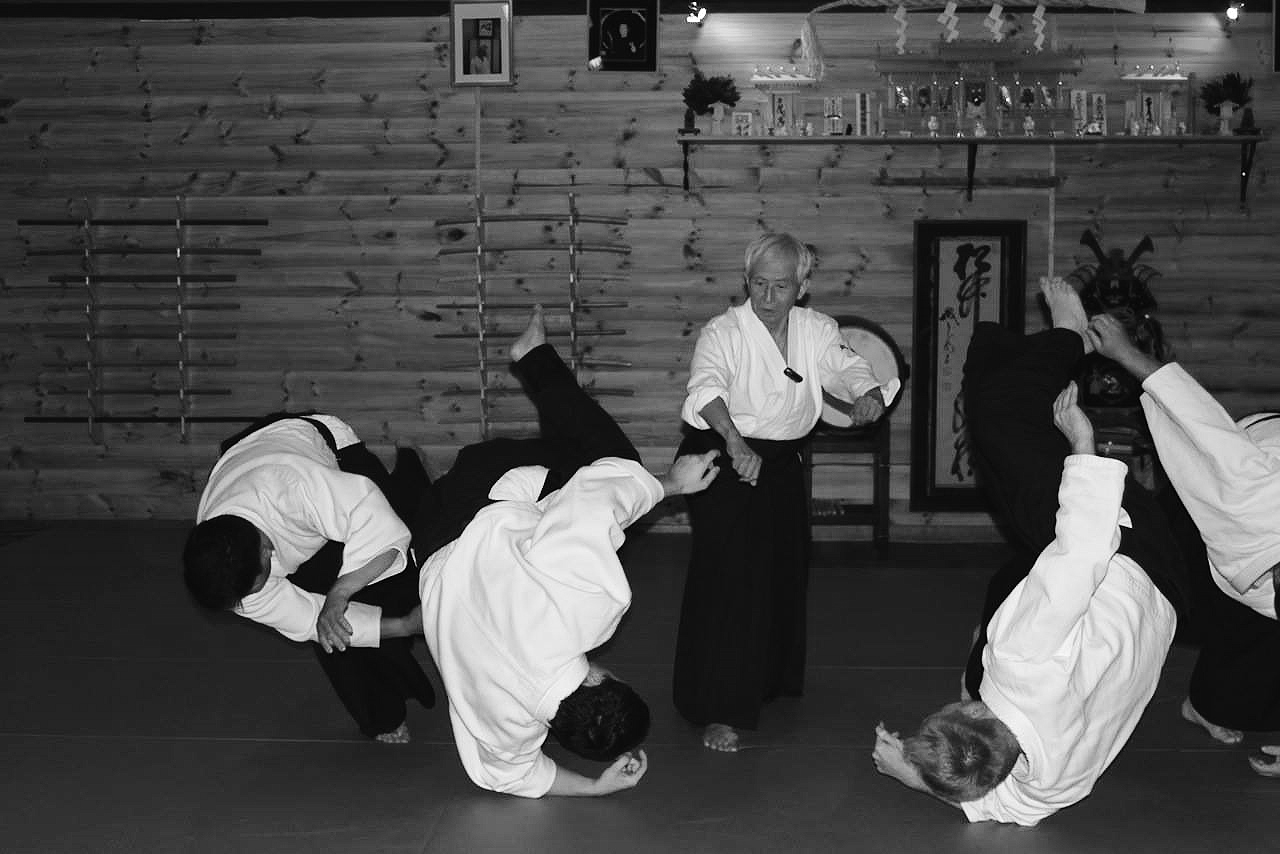
The instruction not only includes the shape or outer form of the technique but also covers the inner structural aspects that make it work in a martial context. Key Aikido Yuishinkai principles discussed and shown include “center pole”, sinking, “heaven-man-earth”, centre-line, controlling the space and the “horizontal-vertical plane”.
This video training note refers to the first in a new series of training videos prepared by Peter Kelly Sensei (7th Dan Aikido Yuishinkai) dealing with the topic of ukemi and uke arts in Aikido Yuishinkai practice.
The Founder of Aikido Yuishinkai, Master Koretoshi Maruyama, has asked that the development and advancement of high level ukemi skills be given a priority focus in our Aikido training in Australia this year. To this end Peter Kelly Sensei, Technical Director for Aikido Yuishinkai in Australia, has been travelling the country to give ukemi (and other Aikido) training to Aikido Yuishinkai members.
In support of this training, Peter Sensei has prepared a series of training videos to assist instructors and students in developing the requisite skills. The below video is Part 1 in the series. Topics covered include:
What is ukemi?;
Responsibility of the uke to give a tangible attack so that the nage has something to work with;
The folly and danger of acrobatic/circus rolling in Aikido practice;
The importance of rolling “like a cat”
Exercises to develop good ukemi skills;
Responsibility of the uke to not anticipate attacks, stay connected and remain centred for as long as possible;
Remaining relaxed when taking ukemi, including when breakfalling.
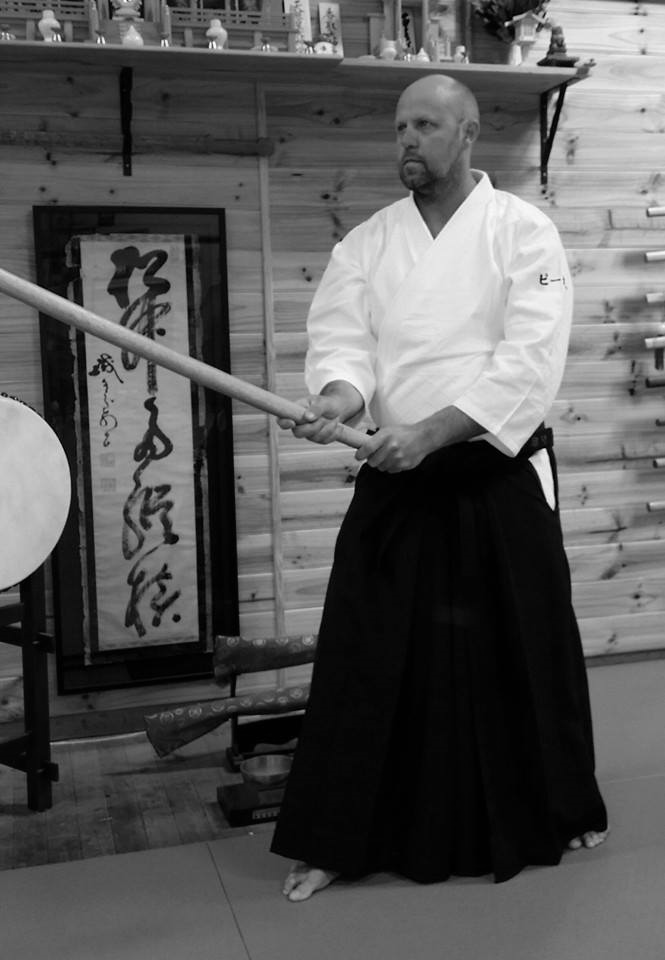 Bokken arts are not formally examined as part of the grading syllabus in Aikido Yuishinkai until shodan (black belt). However, due to the many transferable skills that Bokken arts offer in aiding our tai jutsu (unarmed) training it is quite common for students to be introduced to these wooden sword based arts almost from the outset.
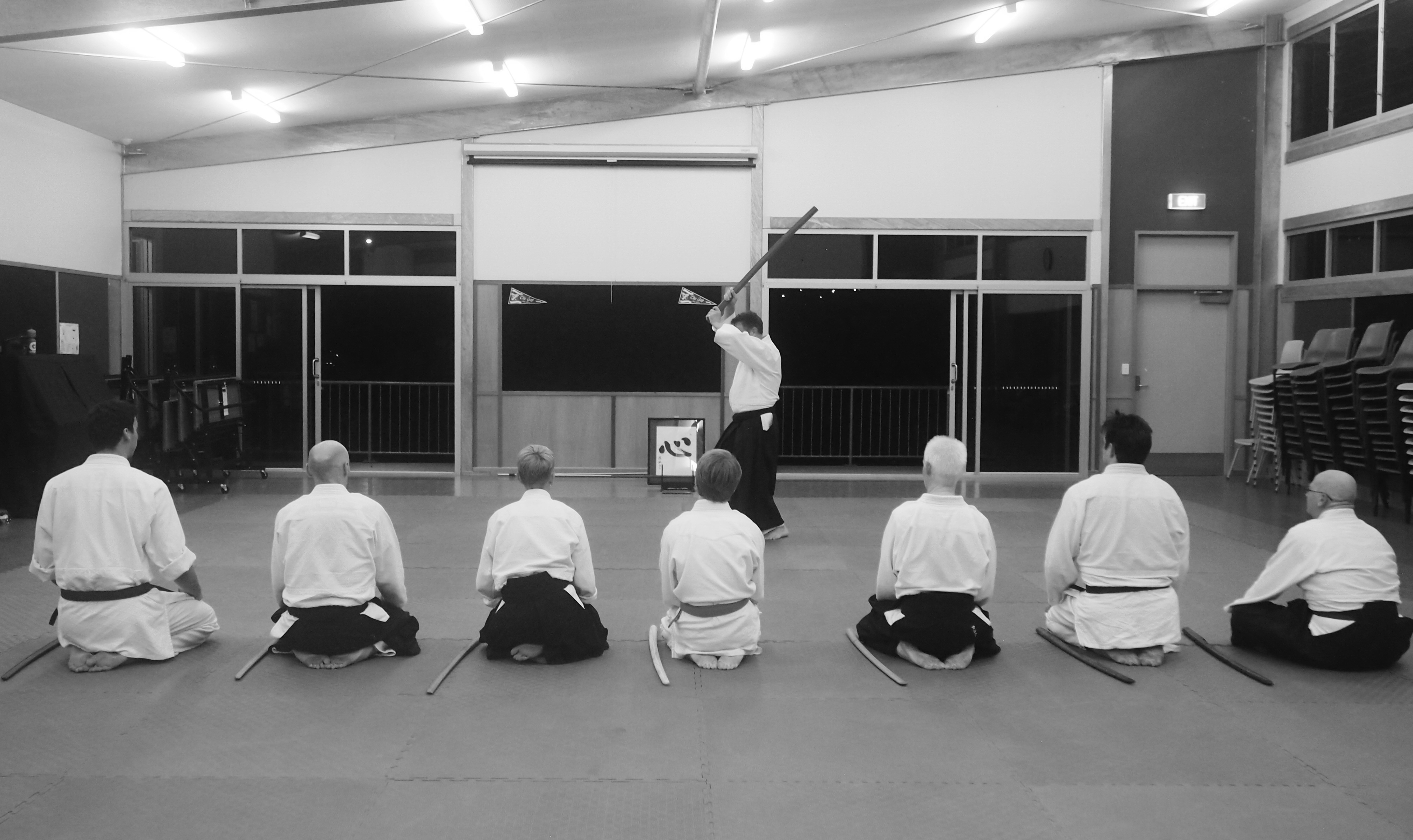 At our dojo we regularly practice 3 different forms of bokken happo giri. These are omote, ura and irimi. All 3 forms involve an 8 way cut, however, the footwork differs in each. Each form directly translates into our tai jutsu practice by automating correct footwork and centred relaxed movement in our Aikido techniques.





 Aikido Warrior Dojo
You must be logged in to post a comment.