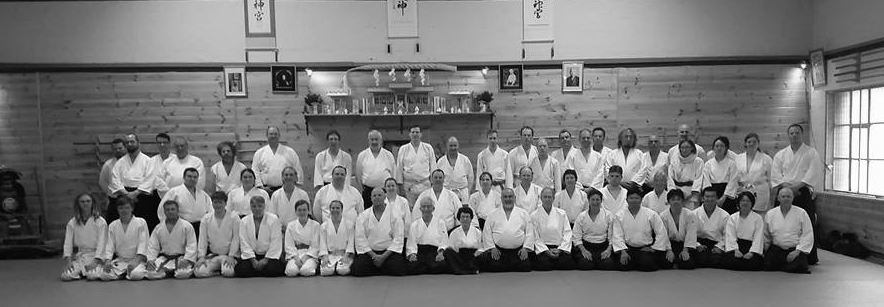
 This year’s Aikido Yuishinkai national seminar is now in the history books and will be remembered as one of our finest. It’s been 2 years since Master Koretoshi Maruyama, the Founder of our School, has visited Australia and it was great to have the opportunity to once again have the benefit of his direct teachings.
Our school is particularly fortunate to have Maruyama Sensei as our Founder. Sensei has been practising Aikido for close to 60 years and is one of the few direct students of O’Sensei still actively teaching. A brief summary of his remarkable life in Aikido can be found at this page on our site.
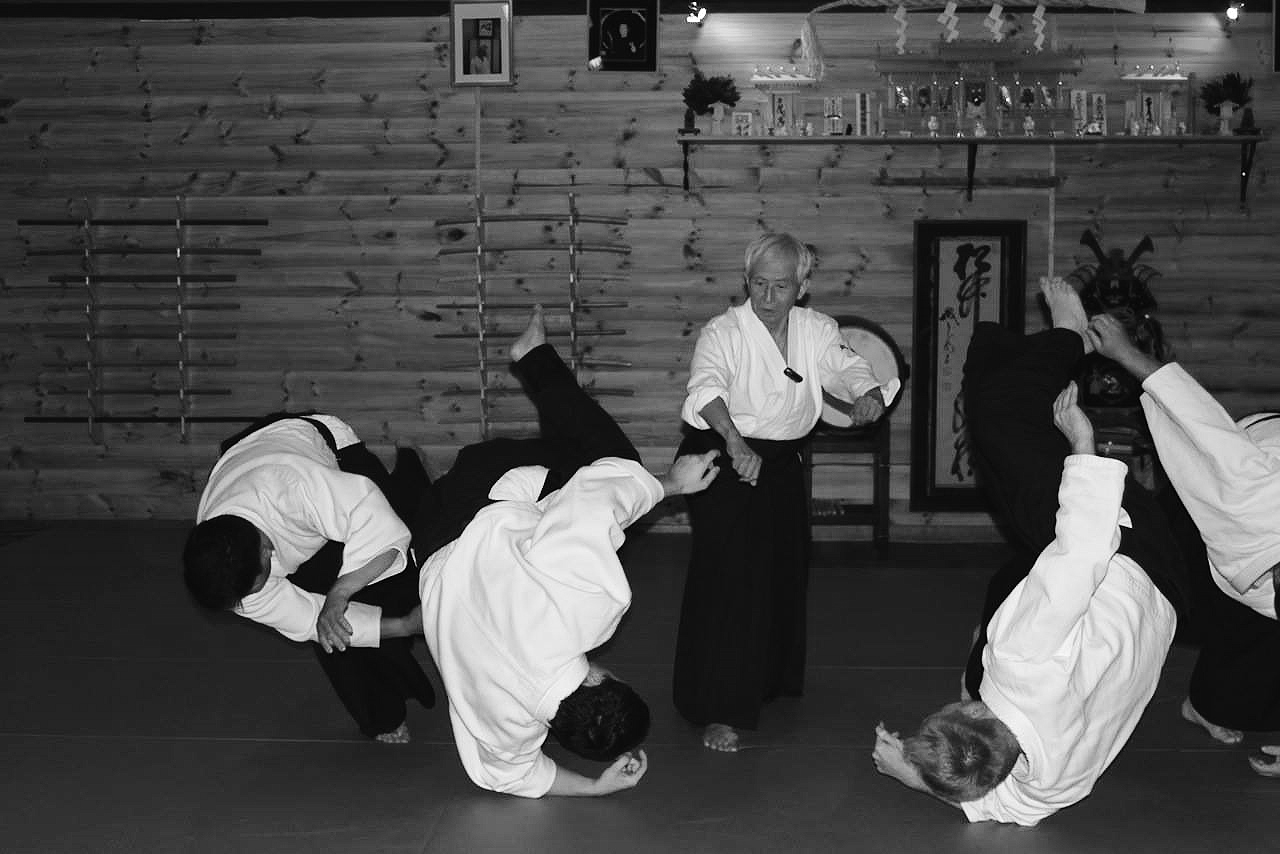
 The seminar this year was held at Seishin no Shugyo Dojo in Tasmania. It’s hard to imagine a more perfect setting for Aikido training as there is an undeniable sense of martial arts tradition in the dojo. For those who haven’t had a chance to train there, the walls are filled with a wide array of Samurai and martial arts memorabilia that has to be seen to be believed.
Key themes of this year’s seminar included a focus on:
- Natural posture;
- Centreline;
- Removing unnecessary muscle tension; and
- The importance of using gravity to achieve effective technique.
 Sensei demonstrated and taught these and other themes through an array of traditional Aikido kata ranging from the basic to the advanced. In addition, there were also some fun segues to explore such things as Bruce Lee’s one inch punch and relaxed palm defensive striking. One of the many highlights for me was the chance to learn the higher level version of Yokomenuchi shihonage which is something I have been keen to explore for some time.
Anyone who decides to host a national seminar in my view deserves a medal. An incredible amount of effort (and accompanying stress) is needed to host one of these events. A big thanks to Peter Kelly Sensei (and his Dojo students) for doing such an amazing job.

Have a great week
Ian
Ian Grant
Head Instructor
Aikido Warrior Dojo
 In the below video Morihiro Saito Sensei (1928-2002) demonstrates the three traditional versions of Yokomenuchi irimi nage as practised by O’Sensei (the Founder of Aikido) in the immediate post-war period of his life.




 Aikido Warrior Dojo
You must be logged in to post a comment.